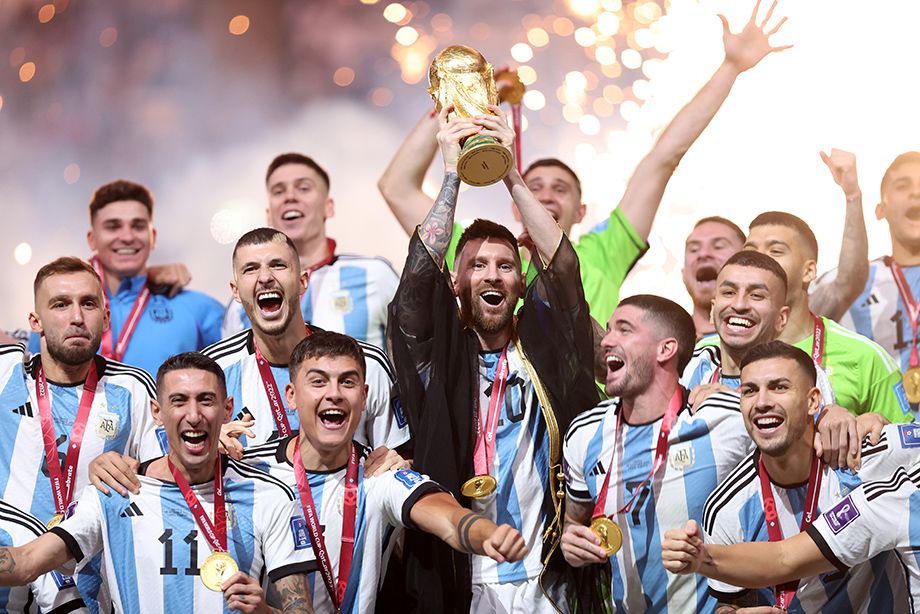
Never before had a World Cup gotten off to such a bad start. Awarded to Qatar, with Zinédine Zidane as its ambassador, in an atmosphere rife with suspicion of corruption. Much has been said about this country, half the size of Brittany, which managed to change the World Cup season for the first time since its inception, air-conditioning its stadiums and working laborers to death to ensure all the stadiums were ready on time. Regarding the date change: playing in the summer after the club season allowed for player preparation and team building, which is always difficult with national teams, where chemistry must develop quickly and results must be immediate; playing in the winter guarantees players who haven't played a full season, therefore less worn down mentally and physically, and who benefit from their preseason preparation… As for the labor, have we ever heard of the low-cost labor systematically used for decades at every major event around the world? Similarly, the argument about the players' health being at risk in this climate was laughable. Who cared about the players' health at the 1986 World Cup in Mexico, for example, where the heat and humidity were unbearable? The organization of the tournament didn't raise any eyebrows at the time. Qatar's selection should have been denounced as soon as the country's name started circulating; afterwards, it was too late, and decency should have prevailed. From a sporting perspective, this World Cup marked the end of an extraordinary generation: Cristiano Ronaldo and Lionel Messi were playing their last World Cups. This World Cup was heralded as the arrival of Mbappé. The young French prodigy was poised to bury the old guard without breaking a sweat.
From the very start of the competition, the organization proved remarkable. Of course, there were complaints about the air conditioning; this sense of suspicion had to be cultivated. A former President of the French Republic was even heard complaining about the World Cup, saying he "wouldn't have gone." Someone whispered in his ear that in that case, he shouldn't go to the Parc des Princes to support Paris Saint-Germain anymore. As always during the World Cup, nations clash with other nations. This is the inimitable charm of this competition: the World Cup, the world's greatest event, highlights the differences between peoples and exacerbates them. In a sense, while the World Cup illustrates capitalism and liberal society, it continues to project an image contrary to globalism. Where club teams are sold off to financial powers and often no longer have any local players in their lineups, where training is virtually nonexistent, where they buy and sell what are essentially modern-day slaves, even if some of them earn incredible sums, all of this should raise concerns about the world's capacity to remain humane. National teams are resisting, the World Cup is resisting, clubs have tried to seize power through world championships, and it's not to say they won't succeed one day, but for the moment, national teams are resisting, come what may . The football World Cup has a very particular aspect compared to the World Cup of other sports; here, the uniqueness of the game aligns with nationality. Football isn't based solely on strength or speed, on physicality, but on footwork, a limb with which it's much easier to do wrong than right, hence the expression "to play like a foot." The rhythm, the cadence, the way of getting from point A to point B, the story told along the way, the way that story is told; the dependence on its origins and culture crystallizes a style of play and makes it inimitable. Football is literature, poetry, music, and Brazilian literature, poetry, and music are unlike French literature, poetry, and music. Thus, the World Cup escapes globalism, which can only choke itself and use its armed forces—liberalism and capitalism—to keep this tournament, which defies it, within its grasp. The World Cup resurrects the idea of country, people, and communion. Asians and Africans don't necessarily succeed at it; could it be because they lack all three?
The erasure of local cultures by globalization resembles a sandcastle, and the nationalistic obsession with the World Cup is like the waves that rise to assail it with the tide. Nature reasserts itself: local cultures, and therefore the history of peoples. In this context, the great match of the World Cup has been played from the beginning between Europe and South America. Between colonizers and colonized. Argentina is the first footballing nation in South America because the Jesuits introduced the game there. The game in South America can be discussed for hours. Each country displays a unique way of touching and handling the ball. Ecuador, for example, developed a singular style of play that was appreciated by observers in Qatar. When a South American coach manages a country other than his own, he will first demonstrate his knowledge of local football before implementing his own strategy. While victories between Europe and South America (as South America is nicknamed) were once perfectly even, since 2002 and Brazil's last victory, Europe has taken the lead, 12 wins to 9. In 2002, the score was 9 for South America against 8 for Europe. Since 2006 and the rise of global competition, Europe has won the World Cup four times, leaving no room for South America. A few months before the 2022 World Cup, Kylian Mbappé, the best French player of his generation, gave an interview to the Brazilian channel TNT Sports and stated, with his legendary nonchalance tinged with a certain arrogance: "Brazil is a good team. Then again, there are a lot of European teams too." The advantage we Europeans have is that we play amongst ourselves with high-level matches all the time, like the Nations League, for example. When we arrive at the World Cup, we're ready, whereas Brazil and Argentina aren't at that level in South America, Mbappé believes. Football isn't as advanced as in Europe. That's why in the last World Cups, it's always the Europeans who win. Not the best way to make friends in South America in general, and in Brazil in particular. In the old days, people learned to think before they spoke! If anything works well in South America, it's memory. South America is connected to globalism through its financial networks, but otherwise, even though it has adopted the customs prevalent in Europe (a kind of soft culture of globalism, the last vestiges of Christian belief in possessing wealth), South American countries cling to their uniqueness and identity. One only needs to see a South American football team singing its national anthem to realize that it's not about putting on a good show for the cameras, about pleasing the adoring public, or about a meaningless appetizer. Representing their country is the greatest experience these players can have. They would give everything for their country, wanting to show the honor it means to them to wear their national jersey. And this passion for their nation, or what it represents, permeates all levels of society. Mbappé, in his interview, could have diplomatically highlighted this difference, as it seems to be the main difference between Europe and South America. “Dibu” Martinez, the Argentinian goalkeeper, responded by inviting him to come and play in South America so he could experience “the difficulty of playing at 3,000 meters altitude, in La Paz, Ecuador, in 35°C heat, or in Colombia where you can’t even breathe. They always play on perfect pitches, like billiard tables. He doesn’t know what South America is like. Every time we go to play with the national team, we’re exhausted and we can’t train much. When an Englishman goes to train in England, he’s there in thirty minutes. Let him go play in Colombia or Ecuador and we’ll see if it’s easy.”
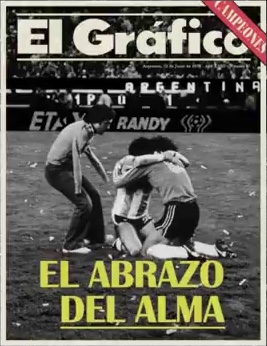 But the statement from the young prodigy from Bondy also suggested that football wasn't as advanced in South America! What does this mean? It means that the new generation, steeped in American sports, believes in only one thing: statistics. In American sports, statistics are the sole criterion for judgment, and if any sport defies statistics, it's football. How could a sport played with the feet not be subject to statistics? And South American football even more so than European football. For South Americans, it's the spirit that counts. You can see the gulf! In 1978, at the end of the final between Argentina and the Netherlands, Ubaldo Fillol, the Argentinian goalkeeper, and Alberto Tarantini, a defender, embraced each other. Nearby, a supporter leaned forward, his sleeves, empty of arms, virtually embracing the two players. The photograph by Ricardo Alfieri graced the front page of El Grafico and remains cherished by Argentinians, who call it " El abrazo del alma" (The Embrace of the Soul). For many reasons, this photograph would not exist in Europe. Probably because eugenics there involves ethnic cleansing of everything deemed dirty and different, everything that seems imperfect. In South America, the dirty, the dark-skinned, the poorly educated, the cheat, still finds their place in society… How much we heard before the final, especially from journalists who spoke of Argentina as if it were these people, with blatant contempt! The sanitized world lacks words strong enough to caricature these porteños . An Argentinian hero, a figure in the pantheon of Argentinian mythology, Diego Maradona, continued to write this story of revenge against a world devoid of poetry and driven by automation, defending the poor against the white-collar petty bourgeoisie. He wrote it from Argentina to Naples, another stronghold of a world disappearing under the onslaught of globalism. “The Neapolitans are today a large tribe… that has decided to die out, rejecting the new power, that is to say, what we call history or modernity… It is a refusal, emanating from the heart of the community (we know of mass suicides among herds of animals); a fatal negation against which nothing can be done. It provokes a profound melancholy, like all tragedies that unfold slowly; And moreover, a profound consolation, because this refusal, this negation of history is just, is sacrosanct,” wrote Pier Paolo Pasolini. In this life where the street dictates its law, poetry is omnipresent. Because poetry recounts life. Poetry ends just when life transforms into an “air-conditioned nightmare.” In his interview, Kylian Mbappé expressed the typical arrogance of a European who thought South America was the Third World, that its facilities didn't measure up to European standards, that its players, while technically gifted, were no better than their European counterparts, and that the Europeans had even surpassed them… It's astonishing to often encounter this arrogance among young people from disadvantaged French suburbs (a term that would make an Argentinian burst out laughing, by the way). This arrogance would have been completely absent from the French national team players of the late 1980s. Perhaps these young people think—and it's worth noting that this is a common sentiment among Generations Y and Z—that they created themselves. A spontaneous generation.
South America, therefore, doesn't live at the same pace. There, programs air during prime time to discuss tactics, poetry, dribbling, that goal that encapsulated the very soul of Ecuador or Brazil… Players participate alongside intellectuals, philosophers, psychologists, and sometimes even priests. Jorge Valdano, striker for the victorious Argentine team in 1986, settled in Mexico for the competition with a library of about a hundred books to read during the tournament. Luis César Menotti, coach of the Argentine team in 1978, began his press conferences by quoting Borges or Ocampo… Imagine for a moment Didier Deschamps responding to a journalist by quoting Chateaubriand or Houellebecq to support his point? In 1990, upon arriving with the Argentine national team in the United States, host of that year's World Cup, Diego Maradona declared that if the team won the trophy, he would not take it to the presidential palace (Carlos Menem was then embroiled in corruption scandals), but would instead lay it at the feet of Ernesto Sabato (the renowned Argentine writer who was ailing at the time). Culture permeates the streets of Argentina as much as football. The authority of a great writer is revered. Even if one has never read him, one understands his importance. One admires him by repeating a phrase or a turn of phrase. And we talk about football for hours. Argentina is tearing itself apart, a European country in South America. It has its followers, Menotti, who love flamboyant, attacking football, and its followers, Bilardo, more cautious, more pragmatic… Argentine coaches enjoy an immense reputation; they often coach other South American national teams. But South American distinctiveness is gradually fading as the cultures that sustain and root them are swept away by globalization. Thus, they awaken and reveal themselves at the World Cup. For how much longer? South American players come to play in Europe at a very young age. Consequently, they are uprooted. Money flows freely in Europe. South Americans are burdened by poverty and debt to these same European countries; they cannot refuse the sums offered by Europe for the slightest bit of talent that emerges. We remember that Pelé and Maradona were naturalized so they wouldn't have to leave Brazil and Argentina too early. These young players, sometimes arriving before they're twenty, uprooted and taken from their families before they've even formed their own, find themselves immersed in a world completely different from the one they've come to know. This systematic plundering by Europe is so similar to modern-day slavery that it exploded with the Bosman ruling (a 1996 legal decision that removed the limit on the number of athletes, both EU and non-EU, who had signed association or cooperation agreements with the European Union in a team or official competition).
What can be said about Europe? For a long time, Germany and Italy dominated Europe. One represented strength and power, the other technology and cunning. People liked one or the other; social media didn't invent that. Endless debates took place, leaning on the bar. Social media didn't invent that either. Thus, we are simply rehashing old ideas we thought were dead. Northern Europe embodied power, unleashed strength, and efficiency, while Southern Europe represented talent, virtuosity, and ease. Southern Europe was Italy, and Northern Europe was Germany, and Italy outshone Germany. The recent balance has been achieved through the addition of Latin teams. France, with its bold mix, was the first to shake the foundations. France possessed both talent and strength; not everything was perfectly aligned, but they had the best of both worlds. However, they were also fragile. The German and Italian mental fortitudes, the taste for victory that comes only after a triumph, remained their prerogative, and France endured, magnificently nonetheless. The pinnacle of this struggle would remain the France-Germany semi-final of the 1982 World Cup in Seville, where France played romantic football, reaching a peak of creativity against a relentless Germany, who scored the final penalty through a former butcher's boy, Horst Rubesch. The dish proved indigestible. France could feel as though they had set the table, put up the decorations, fixed the electrical wiring, prepared a sumptuous dinner, only for someone to come along and set off fireworks with three firecrackers and win the day. Once again, the weapons differ. Then France won its first title thanks to a Platini worthy of a superhero: the 1984 European Championship. Never before had a Frenchman played at this level in an international competition. Platini scored nine goals in seven matches, but that's just statistics. His mastery, his control over his team, his certainty of showing Europe that he was the best European player was perfect, indomitable, and tempestuous. Great champions have a signature style. France left its mark on the competition with a style, a style that was uniquely its own, that could only have come from it, because it blended technique and strength, pride and humility, know-how and innovation. But the Platini era was coming to an end, and France would live in the shadow of a resurgent Italy and Germany. Football teaches you to play to your own strengths, not those of your opponent. Romantic France was marked by the meeting of Hidalgo and Platini, two men whose names say it all about France. The French national team can only be a conglomerate. However, the combination of players on this team, especially in 1982, leaves the taste of an extraordinary alchemy, a highly refined dish, and an expression of freedom unknown to the world. After Platini came the Bosman ruling, which began to kill the team as a whole, since it became enough to buy players. The players began to no longer belong to the country, to become something of a franchise… because it was necessary to become American to the very end, to copy everything. In 1998, France won the World Cup for the first time; a victory built on the success of 1984. Aimé Jacquet, a man raised on farm work, with a vocational certificate in metallurgy, took charge of the French national team amidst the jeers of Parisian journalists. While Aimé Jacquet, born in 1941, bridged the gap between the two generations, he distanced himself from this romantic and creative style of football, favoring defensive solidity. There are two types of coaches: those who want to concede one less goal than the opponent and those who want to score one more. To Jacquet's credit, it could be argued that the trend for romantic football had faded. The 1982 World Cup marked a kind of peak for this style, with three teams playing it: Argentina, Brazil, and France, each with squads featuring two or three number 10s and emphasizing creativity. None of these three teams reached the final of the 1982 World Cup, which saw Italy face and defeat Germany. Both of these national teams had reinforced defensive foundations. The 1986 World Cup in Mexico saw Argentina win, having abandoned its flamboyant style… While the French national team from 1974 to 1982 was built on the Hidalgo-Platini partnership, the French team from 1996 to the present day is built on the Jacquet-Deschamps connection. Sharing the same philosophy and pragmatic approach to the pitch, both men agreed that football should primarily rely on athletic players and a solid defense. During the era of German dominance, Gary Lineker, the esteemed English player, declared: “Football is a game played by eleven against eleven, where the Germans always win in the end.” With Aimé Jacquet and, even more so, Didier Deschamps, this statement could be applied simply by replacing Germany with France.
In 1978, the Argentinian players approached their coach, Luis César Menotti, admitting they were terrified of playing against the German players they had just faced, players to whom they outsold in height and weight. "How can we possibly win against such athletes, Coach? They're magnificent and incredibly powerful! We don't stand a chance!" Menotti, true to his wise manner, looked at them and replied, "They are taller than you, stronger than you, more powerful than you, but they wouldn't last two weeks in your lifestyle. So, don't be afraid of them; they should be afraid of you." Football remains a sport in which David can defeat Goliath. David's cunning, his resourcefulness, his technique—that's precisely what the Argentinians possess against sheer force.
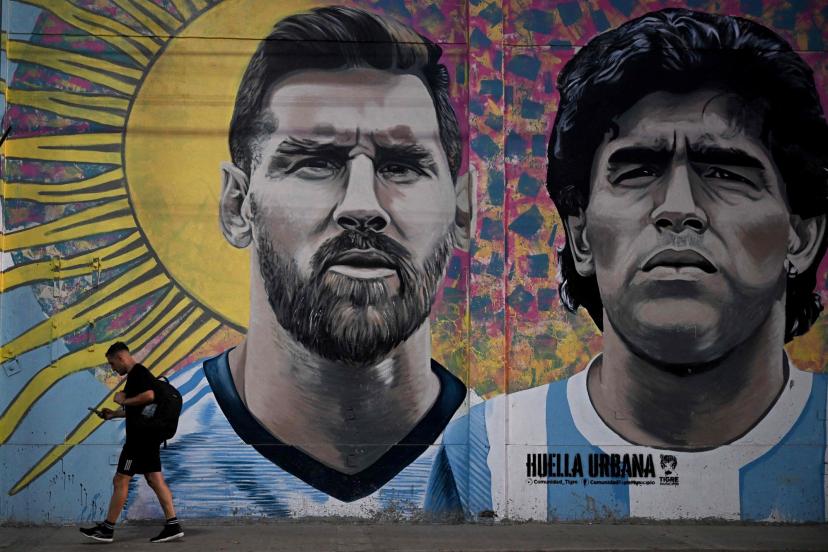
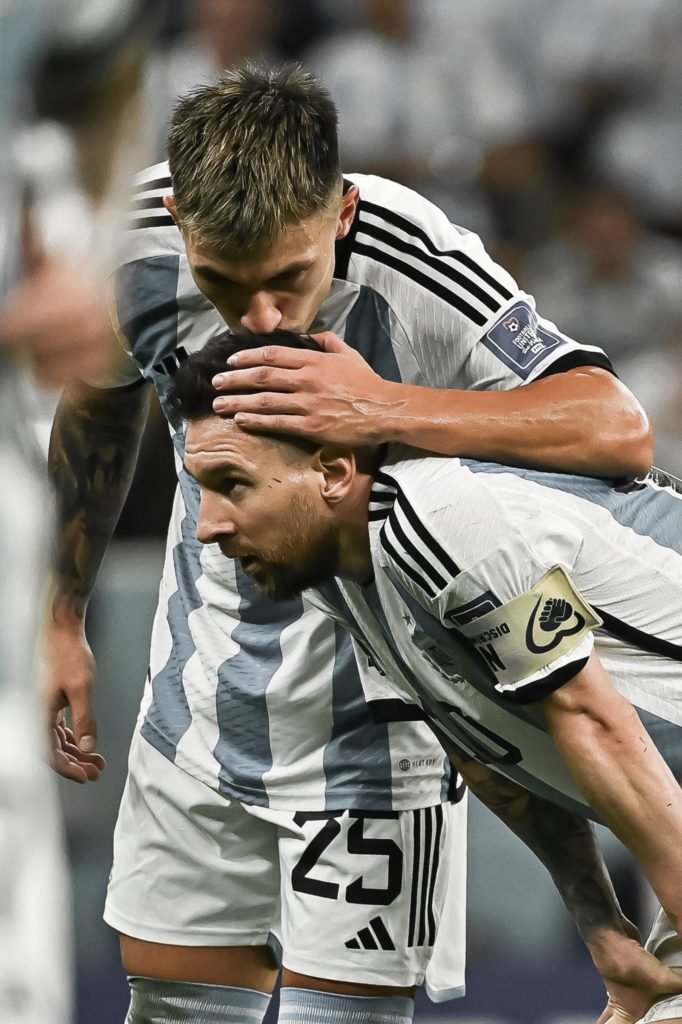
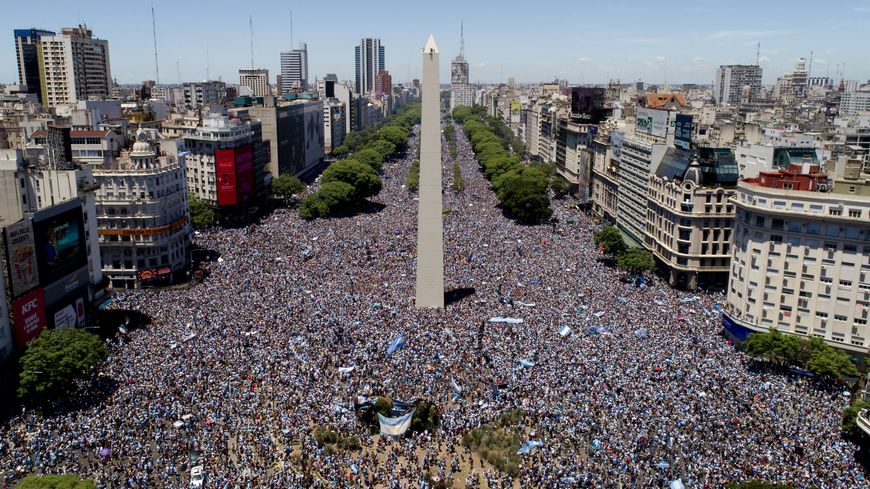
The World Cup in Qatar would pit Europe against South America, with the established stars ready to take on the rising stars. France immediately broke the curse of previous winners by advancing from their admittedly easy group. Brazil did the same. Argentina got off to a chaotic start, losing to Saudi Arabia. The first World Cup played in winter was in full swing and full of surprises. Few teams stood out for their style of play, few were daring, and Ecuador took the prize for the most dazzling football. As always since 1986, the second round saw the tension rise as the knockout matches began. What was quickly noticeable was the fervor of the South American fans; Brazil and Argentina were playing on home soil. More than 50,000 Argentinian spectators, not counting all the supporters for Messi, for his last World Cup. Among Argentinians, there are two Lionels: Messi and Scaloni, the coach, who has built a solid, cohesive team and, above all, who will be able to see the players capable of surpassing themselves. The consistency of his personnel choices will be the key to success. Scaloni is a protégé of José Pekerman, himself a protégé of Menotti. Lineage and history still matter a great deal to Argentinians who see themselves as a nation. This feeling is constantly reinforced by the players who speak of "la gente" (the people) as the most sacred thing to them. La Mosca , a true Argentinian anthem: "Muchachos, ahora vivemos a illusionar" (Boys, now we live to delude ourselves) , tells the modern story of Argentina, bringing together under one umbrella: the victims of the Falklands War, Diego Maradona and his parents, Argentina's misfortunes, and its capacity for resilience! After decades of hesitation, the Argentine Football Association decided to invest in building something new, though nothing is simpler in the modern world. Scaloni, a seemingly unthinkable choice at the time, a recently retired player who had played with Messi in the 2006 World Cup, built the team with renowned former players: Ayala, Aimar, and Samuel, under the guidance of Menotti. Here again: a deep connection to the past! While La Mosca sings the modern history of Argentina, Scaloni and his team base their expertise on the history of Argentine football over the past forty years. In Argentina, the art of the beautiful dribble, the perfect pass, set to a tango rhythm, is best achieved with technical skill! Technique and grit ! Yes, let's add mental strength and attitude, pride, to complete the portrait of Argentine football. That grit that sends shivers down your spine and can sometimes lead players to excessive aggression. Before the final, the first thing that strikes you is a sense of superiority that echoes Mbappé's pronouncements. Kolo Muani declared in a press conference: "I played against Messi and it didn't change my life!" While we readily believe him, and we can be sure the feeling is even stronger in his favor, humility would dictate that we speak differently about a living legend. And the French press continued in this vein, displaying contempt for Argentina, considering themselves far superior, flaunting it, and wondering how this team of "workhorses" (minus Messi, of course) could possibly trouble our Blues. But for an Argentinian, his team must reflect him! And this team does! A team that goes toe-to-toe with France and the Netherlands, unparalleled economic powers. This is the eternal Argentina! And the way Scaloni and his "Scalonetta" (the nickname given to the national team) started this final immediately showed that they were in no way intimidated by facing the world champions. To what seemed like arrogance, a touch of racism at times, and a pronounced Eurocentrism, the Argentinians responded with their pride, their grit, and their skill. Scaloni first outclassed Deschamps tactically! For three matches, the Argentinian coach had been fine-tuning his team, which he had had to improvise as the tournament progressed, especially after the defeat against Saudi Arabia where some players had been out of form. One could see the influence of Pekerman, with an extraordinary midfield composed of Mac Allister, De Paul, and Hernandez, who played like three number 5s (the South American number 5: the libero in front of the defense who brings order and is almost a deep-lying number 10 playing with the same freedom). Scaloni constructed a three-man midfield where all three played like number 5s, each playing their own part by covering a vast area of the pitch and moving in centrifugal and centripetal circles, and simultaneously like a single, three-member number 5 who could interchange positions and drive opponents crazy, seeing them suddenly on the left, suddenly on the right. The second Argentinian goal was sublime, with Mac Allister moving to the right wing when he was on the left, and De Paul occupying the French midfield in an area he rarely ventured into. With that same relentless drive to continue attacks to the very end, as taught at Barcelona's La Masia academy and praised by Pekerman, for example, to carry the ball as long as possible to overwhelm and disorganize the opposing team. With a maestro like Messi to orchestrate all these elements, and a daring and relentlessly pressing Juan Alvarez, this team could have hoped for great things. From the Netherlands to France, in just three matches, Argentina built this midfield, refined it, polished it, and dominated all its opponents. Even the Croatian midfield, lauded throughout the tournament, was swallowed up by the Argentine midfield. And this didn't worry anyone in France? The final unfolded with the dramatic intensity we now know, magnificent, and incredibly tough for Argentina, who could have finished the match in 90 minutes had they pressed forward after taking a 2-0 lead. And fighting spirit played a crucial role when, in extra time, they rallied, resumed their game plan, and began to dominate again as if nothing had happened, despite having weathered a storm where their survival hung by a thread, as if the cruelty of the match didn't affect this team, as if they knew, like Argentina's destiny, that they would suffer once more to see the light at the end of the tunnel, as Ernesto Sabato might have said. Lionel Messi, who holds the record for most World Cup appearances, is the first player to score in the group stage, the round of 16, the quarterfinals, the semifinals, and the final! A crowning achievement. And the intensity Messi brought to this World Cup was incredible. It was this intensity that the Argentinians recognized. The introverted Messi emerged as captain of this team, and it was by forging this quality, by becoming another Messi, more outgoing, more extroverted, that Messi became Messi! The descendant of Maradona became his equal. Four million Argentinians took to the streets to celebrate their heroes. Four million people ! The earth shook! The whole world supported Argentina! The whole world was painted sky blue and white. The whole world became Albiceleste . This is how Argentina showed Mbappé that South American football was not dead!

Leave a comment