Part 7 and final part: Love
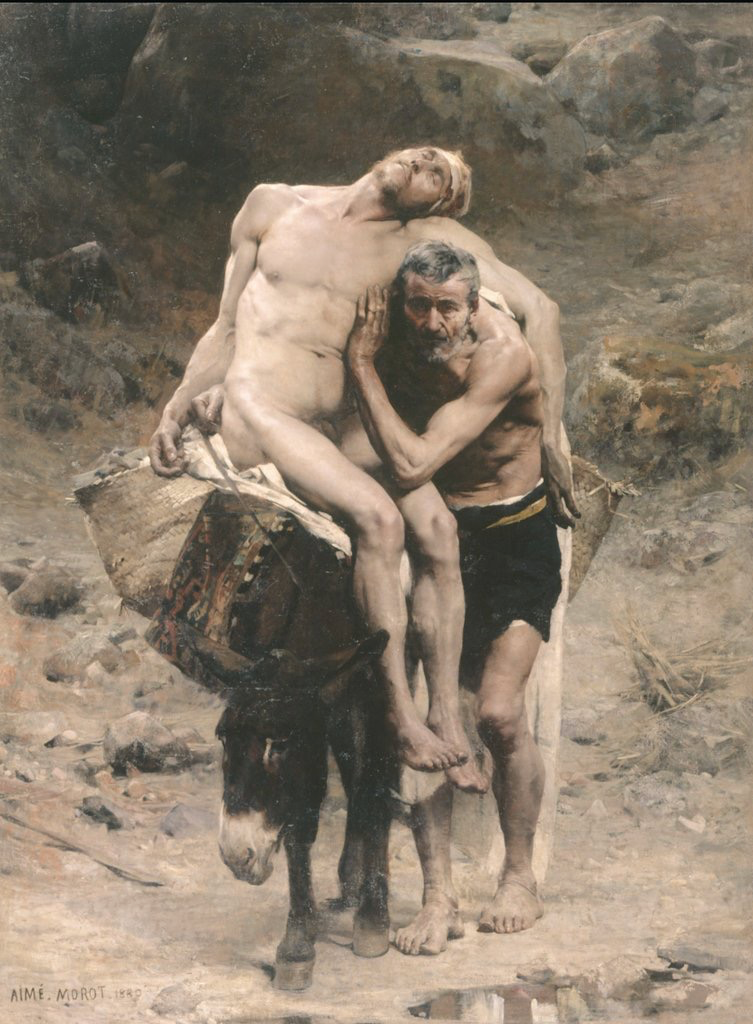
Antigone's desire is familial; she does not want to leave her brother unburied. Creon, on the other hand, desires to assert himself as king and demonstrate his power. Antigone prioritizes family ties, which embody love and reveal a person. Creon consolidates his power by signing a law intended to establish his authority. The same word characterizes their actions: desire. But desire does not recognize desire in others; one might believe, especially if one is tempted to idolize desire for its own sake, that desire endorses every desire it encounters. Between Creon and Antigone, it is the measure of their desires that matters. Face to face, Antigone and Creon will intensify their desires in the face of the adversity they encounter. But is the source of Antigone's desire still understandable today? Indeed, Antigone's desire, this desire founded on justice—justice done and rendered to her brother's remains and to the gods—takes on its full meaning because it is communal, rooted in a city and a family (a limited vision of the city), and in a belief. Antigone leans on the gods to challenge Creon. Antigone does not express a personal desire; she defends an eternal law, she defends her duty to speak it out, to proclaim it before any power that considers itself above her. Since when have we heard no one rise up in the public sphere to proclaim their duty, even at the cost of their life? The worst part? We have become accustomed to this silence, this resignation. Transcendental laws no longer tell us much, so nothing rises above and corrects the laws that pass before us and surround us like debris in a stream. The communities that strengthened the individual within a space that protected them and allowed them to grow have shattered. The individual now resembles a rogue electron, able to build itself only on gusts of wind that constantly exhaust and disorient it, erasing even the taste for meaning in life. Social life rests on law and law alone, but in a place without geography, populated by rootless people, all rights are equal and are crushed in a hideous chaos. Creon holds the power. Antigone is the daughter of Oedipus. In an age where it is all about having, possessing, acquiring, Antigone carries—since one must evaluate—very little weight. The methodical destruction of all metaphysics is akin to a crime against humanity. Perhaps the greatest the world has ever known. Since I can acquire anything with a click, I only need to know my desire in order to satisfy it. We also understand that this individual desire, which nothing protects from its appetite, accepts no limits, especially not those imposed by others; then envy, depraved and debased desire, comes into play.
Being is not necessarily opposed to having, if having allows for reflection linked to that possession. The voice that enters the pores of the skin nourishes being, knowledge, and allows for a different relationship with oneself and therefore with others. Knowing the other without self-knowledge is akin to exoticism, and this discovery will remain at the stage of having; it will signify inauthenticity and recount a rape, a news item like so many others, the rape of the other because they are other. The more we reject the idea of being, the more this idea torments us; we have only our magic wand, technology, to hope to settle the score with it once and for all. The struggle is fierce; we think we are making progress, a previously unknown fact surprises us. We advance rapidly like a snail. All our decisions seem invalid; we can train relentlessly for a run only to have a heart attack. All advice seems to be aimed at someone else, or at the wrong time. Our equilibrium is precarious, and we pretend to forget it to allow our pride to flourish. Only technology can save us, and we believe that NBIC technologies, particularly under the name of transhumanism, will solve the equation of life. But already, nature's rebellion reminds us—and all those who, through ideology, had banished even the word "nature"—that humanity is accountable and will never cease to be so. The world without God ushered in our omnipotence, where our desires were to be satiated to the point of exhaustion; this power, so decried in tragedy, is always punished by the gods with complacent cruelty. Nothing harmonizes us anymore, and we are like a musical instrument out of tune. “You will be like gods,” the serpent told Adam and Eve, as they ate the fruit of knowledge—unbridled knowledge, knowledge that makes one believe oneself to be God, and knowledge that kills God. “Know thyself,” “But not too much,” echo the two fragments of Delphic sayings. Narcissus will be happy “if he does not know himself,” the soothsayer predicted. The knowledge of good and evil, this “face-to-face” knowledge of which Saint Paul speaks, cannot take place in our lifetime without risking being consumed by its burning flames.
How did Antigone live after her father's death? Waiting for her brothers, heartbroken to see them argue, quarrel, wage war, and kill each other. She who had always wanted to be the balm that soothes pain and passions. She who would always be acutely aware of the curse weighing on her family. This is how Haemon evokes the figure of Antigone, who still illuminates the city of Thebes: "I am allowed to hear in the shadows what is said, the city's grief for this child. It is said that, of all women, she is the one who least deserves an ignominious death, given the brilliance of her actions. She is the woman who allowed neither the flesh-devouring dogs nor any bird of prey to destroy the unburied body of her blood brother, fallen in a massacre. Does this woman not deserve to receive a reward of gold?" “The city of Thebes loves Antigone. She is the daughter of Oedipus, and despite all her misfortunes, her legend lives on. Oedipus is not a typical victim. Is he truly a victim? He struggles, he fights, he never ceases to examine his soul, even when disaster engulfs him. Antigone survived. How did she do it? All of Thebes is proud of Antigone’s will to live. All of Thebes laments that an unjust law has befallen her, for all of Thebes knows that Antigone remains true to herself, she who has nothing left but herself. This commands the respect of the people of Thebes. Antigone doesn’t need to speak at length for the people of Thebes to understand the meaning of her existence; everything she does, all her actions, are guided by this fidelity, which is simply the expression of the love she bears for her family.” And her final gesture expresses this love perfectly; love cannot perish. Antigone does not want her memories, all the love accumulated within her family despite the curse, despite everything, to evaporate and become meaningless. Antigone is determined to be faithful, completely faithful; she is consumed by this fidelity that is her entire life. It is the outward appearance of a profound inner life.
Antigone has collected her childhood memories, her joys and her sorrows; she knows that the truth of her being resides there, allowing her to achieve that coincidence of self with self, that harmony of body, mind, and soul, and the appeasement of the latter. Like Ulysses, who never leaves the memory of Penelope, or rather, Ulysses sometimes leaves it, but then it is the memory that returns to haunt him. The inner life reveals itself as a remedy for all defeats, all humiliations, all harm. The similarity with the hero of Ithaca can be extended: like Ulysses, Antigone is nobody, meaning that her identity is always yet to come, that her appearance, her outward life illustrated by her name, is nothing compared to her inner life. It should also be noted that with her name alone, one could easily categorize her as simply the daughter of Oedipus, and that would be all. No one opens the door to an infinity that can be a vast shore where one will be lost forever, or one where one will find oneself intact, but tested. Antigone finds herself by burying her brother against the law and in defiance of his own life. What Antigone wants to express is summed up in this gesture. Odysseus, a little more clumsy, will have to wait until he meets Penelope's gaze to be completely at peace with himself. In both cases, Antigone and Odysseus weave and reweave their traditions; they are faithful to who they are and to the idea they have of who they are. This rare and eternal moment can only be explained in the history of all humanity by love. No one, like the mask of tragedy. No one is not to be nothing, but rather something other than what one is. Prosopon means face in Greek, and persona in Latin, the theatrical character. This word, in retrospect, reveals the passing of the torch from ancient Greece to ancient Rome. In tragedy, the actor dons a mask to conceal their emotions from the audience, allowing their words and actions to define their identity. In ancient Greece, what cannot be seen is hidden. I am nobody, for I have no face, and I challenge my interlocutor: "Will you be able to converse with me and be guided only by my words and actions?" A mirror separates ancient Greece from ancient Rome. The birth of a monster is nothing other than seeing oneself as other, for it takes on the features of the deepest and most indelible humiliation. When Odysseus replies to the Cyclops, "My name is nobody," he resolves to use this subterfuge because he is playing a role, embodying someone, someone he is no longer entirely. He plays his part, but what the Cyclops doesn't know is that Odysseus says, "My name is Nobody," with a capital N; Nobody is a name! He does what Odysseus would do, but with hindsight, with the knowledge and acceptance of not being himself, but rather Odysseus. He is the fallen Odysseus, lost, astray, far from home, far from everything, lost by the gods—that is to say, he takes responsibility for being King Odysseus and acting in his name during the confrontation with the Cyclops. A little of Odysseus remains in Odysseus, and from this little, Odysseus will draw the strength to be himself again. Odysseus's greatest cunning lasts almost the entire Odyssey: declaring himself to be someone else in order to be more himself. For being oneself is not nothing. Many flee this possibility in the intoxication of our time. Baudelaire liked to praise intoxication for its own sake. He would have hated our era, which no longer knows sobriety. Intoxication only has flavor when tempered by sobriety. Odysseus can only don a mask, his mask, with a profound awareness of who he is. He is no longer king; he is without family, without country, and almost without hope. He wears this mask in front of his men as well, not because Odysseus wishes to deceive them, but because he doesn't want them to lose hope for anything in the world; Odysseus must therefore remain Odysseus in their eyes. This compassionate illusion is well known to leaders, and while it must not last, it proves essential, allowing the leader to see if his men continue to adhere to the image of the leader, which is as important as the leader's persona. In command, the prosopon and the persona remain essential. To put on the mask of Odysseus, to embody his character, is to proclaim to the world that Odysseus is not dead. This is the identity of Ulysses, the Ulysses , as advertisers would say today. With Antigone, the situation is different. There is no known Antigone brand, and Antigone acts alone, which makes her actions all the more astonishing. Because Antigone is a woman, she uses the mirror. She is nobody in the face of the king, even if he is her uncle, even if he is her future father-in-law; she is nobody because of her family tree, which is nothing but shame, and she is nobody because it is her brothers who cause the chaos in Thebes. And it is precisely because it proves so easy to think of Antigone as nothing that she transforms into a person. But she is this mirror for Creon, which the new king will never see, because he will never understand the image reflected back at him—his own. For Antigone comes before Creon as a person, one person among many, mingled with others, living or dead, future or present; the person as tradition, place, and bond, individual and nation, who confronts the king to tell him what everyone must know: the laws of the gods, the unwritten laws, take precedence over the king's power. Antigone could say to Creon, "I am nobody, and it is in this capacity that I come to educate you," and no one would object. Antigone is nobody, but in the form of a mirror, for it is precisely because she is nobody that Creon should be alerted to what is being plotted. When Antigone appears before him, brought by the guard, Creon fails to grasp that he is facing a crisis, and that by choosing pride, punishment for offense, and rigid thinking, without taking the time to reflect on what is at stake, he is failing to be a true ruler. Antigone reflects back to him this image, so subtle yet so stark: "I am nobody, and for this reason you must understand that I can be your freedom or your destiny." Creon chooses destiny.
Protest springs from betrayed love. Nothing in the history of the world is worse than a rejected lover. All acts of revenge, all wars, all tragedies stem from unrequited love or the loss of love. And the well-intentioned organizers of the modern age understood that from this irreversible process would be born a new, refreshing, and above all, insatiable need for recognition. How many revolutions would have been nipped in the bud if they had been precipitated by a caress or a smile? How many revolutions originate from a slap or contempt? This observation comes from good souls—which is very different from beautiful souls, because the good soul feels a certain pride in being who it is, which disturbs its vision and increases its confusion, whereas the beautiful soul knows almost nothing about itself, sometimes nothing at all… It is unaware of itself and humbled by this ignorance, from which it derives its first virtue. Well-meaning people would like to love everyone, because love is necessary, because we've realized how much animosity contempt or disdain can breed… but can we truly understand a situation solely through its actions and reactions? Isn't that precisely forgetting the soul that presided over that situation? For if we stop at simply observing the action that initiated this situation and the reaction it provoked, we are undeniably, inevitably, and irredeemably reactionary. We can judge here the ever-growing number of reactionaries, demagogues, or populists—depending on your perspective—these labels merely indicating that a group of people agree that they are harmful to public debate and must be singled out as such. But it becomes impossible to think, to engage in dialogue, because the soul is missing from both the dialogue and the analysis of the situation. If the resentment stems from betrayed love, we must understand that it's possible nothing could have prevented the reaction, or that any attempt would only have delayed it. Can the reaction be natural? I mean, inscribed in a man's heart against his will? Evil doesn't belong to man. Evil seeps into him. If the resentment, and the reaction that is acquiescence to the resentment, spring from betrayed love, from a feeling of rejection, from the wound of not feeling loved as one believes one deserves, there is no remedy except to uproot the envy. This is evident in the opening of the tragedy, when Antigone addresses Ismene in an extraordinary plea against all forms of envy: "I wouldn't push you to it; and even if you wanted to act again, I wouldn't take pleasure in seeing you do it to me. Know what you decide. I'm going to bury him." It seems beautiful to me to die doing this. I love him, I will lie beside him, who loves me. My crime will be piety. I must please the people below longer than those here. There, I will lie forever. If that is what you decide, go ahead, dishonor the gods.” “My crime will be piety,” therefore, love of the divine. Antigone is driven by the force of love, and her love is so vibrant that she fears nothing and no one. This love will shake everyone in its path and will astound Creon. Throughout the tragedy, Antigone contrasts the world above and the world below, but always to explain that love is an indestructible bond that transcends the earthly notion of good and evil. Antigone will ultimately proclaim her gospel: “I am made to share love, not hate.” "But above all, a love of authority, a love of family, a love of unwritten laws, a love of the gods. An unconditional love. Not so easy to understand these days when any limit is taken for pettiness or a totalitarian temptation."
Let us first say what this love could have been had it not been conditioned, for it is presented, as some in our time believe, that love must not be repressed in any way, and that if it is, its very essence is lost; it is done, love is dishonored. Are there then different kinds of love? Is it not a form of deceit to believe that there are multiple loves? Nowadays, every impulse is spied upon as a sign of love in its nascent stage, and the seed is thus confused with the fruit. Evil rests on forgetfulness and confusion. "Now we see as in a mirror and in a confused way." Confusion? Pride, envy, forgetfulness—so many flaws that paralyze us like Baudelaire's cormorant. Love is born in dialogue and in vows. If love were merely a dialogue, it would weaken at the slightest provocation, vanish with the whims of the times, and disappear at the slightest setback. What good is a promise made at random? Love, too, is subject to the insufficiency or excess attributed to it, too much or not enough. Since Guénon, quantity has been at the heart of our lives, constantly causing us to fluctuate like reeds in water. Consider the importance given to the adjective attached to the word, or the word that hides beneath the guise of love and suddenly claims to be its synonym. The impulse thus becomes a love poorly expressed, but love nonetheless! We can now love each other too much, or destroy each other for love, or no longer bear each other for love, or even kill each other for love! No one knows the meaning of the word "love" anymore, in an era when it has never been so frequently used. Can we offer a tentative definition here? “Love is patient. Love is caring. It does not envy, it does not boast, it is not proud. It does not dishonor others, it is not self-seeking, it is not easily angered, it keeps no record of wrongs. Love does not delight in evil but rejoices with the truth. Love always protects, always trusts, always hopes, always perseveres. Love never fails.” Thus, exegetes have shown that it is possible to replace the word “love” with “Jesus Christ” in this epistle of Saint Paul without changing its meaning. It does not seem impossible to apply this definition to many saints, if any are still known, and to Antigone, of course, an ancient and pre-Christian saint, but certainly a saint in her attitude and piety. The greatest enemy of love is the adjective “proper.” Self-love kills love. Our age, swollen with narcissism, mired in this self-love that is the worst of ideologies, cannot free itself from this perpetual mirror that constantly tolls the death knell of true love. We are all Creon, gazing at ourselves in the mirror and questioning it like the witch in Snow White to know if we are truly beautiful, if we are truly strong, but this image, this reflection, is never, as in the fairy tale, capable of revealing to us the nature of our immoderate self-love. We are afflicted with the vice of narcissism, but far worse, we have become enamored with this vice; and to love a vice is to no longer know how to let go of it, for the vice marvelously succeeds in becoming one with us, even becoming us. Haemon thus reminds his father several times that he is enamored with his position. Jesus Christ himself had to confront this heightened self-esteem in Peter, his first disciple, when the latter begged his master to keep him with him when he was about to be executed, because he could not live without him. Jesus had to bring him back to his senses and tell him what was being prepared, and it was not glorious: yes, he would suffer martyrdom, but not right away, not with him, and above all, despite his grandiloquent pronouncements, he would betray Jesus before the rooster had even crowed three times. Evil hides in life, sometimes even under auspicious circumstances, like the horse trader before Abbé Donnissan, and takes advantage of weakness, anticipates it, participates in it, and insinuates itself into and corrupts every human feeling, however pure it may be. Antigone desires nothing, she envies nothing; from the very first line of the tragedy that bears her name, she has already fulfilled her deepest desire. She reminded us of the limit, the limit that shapes men, because it is drawn by the gods.
The loss of boundaries leads to madness. The first boundary was the family, then there was the city. From the family, authority, which was the true boundary, was removed. The city, expanded into a nation, still represented a space comprehensible to its inhabitants; the gigantic conurbations devouring the space around them under the pretext of respecting or making their own space worthy, have ultimately rendered people stateless and sleepwalking. There is no need to look for the immaturity of our contemporaries anywhere other than in the loss of the family and the city. Aristotle noted that "man is a social being, and that he who remains savage by nature, and not by chance, is certainly either a degraded being or a being superior to the human species. It is indeed to him that one could address Homer's reproach: 'Without family, without laws, without hearth...' The man who was by nature like the poet's would breathe only war; for he would then be incapable of any union, like birds of prey.” Aristotle here paints a portrait of the perpetual rebel, a temperament found, of course, in nature, and one that is satiated only by its own anger; whether this anger is justified or not makes no difference. Politicians who take action against the family should be wary; the destruction of institutions creates an insatiable will to power. This heralds the reign of anarchy, which is indeed the opposite of what anarchists proclaim, for it proves difficult, if not impossible, to escape the rut of anarchy, and Creon is the perfect example. “Man has this unique characteristic among all animals: he alone conceives of good and evil, justice and injustice, and all sentiments of the same order, which, by combining, constitute precisely the family and the state.” “By abandoning what elevates him, man abandons his human nature. He who cannot live in society, and whose independence has no needs, can never be a member of the State. He is either a brute or a god.” And Aristotle continues: “If man, having reached his full perfection, is the first of the animals, he is also the last when he lives without laws and without justice. Indeed, there is nothing more monstrous than armed injustice. But man has received from nature the weapons of wisdom and virtue, which he must above all use against his evil passions. Without virtue, he is the most perverse and ferocious being; he has only the brutal outbursts of love and hunger. Justice is a social necessity; for law is the rule of political association, and the decision of the just is what constitutes law.” How does one go from a lack of love to a lack of love and to revolt? By giving free rein to one's moods, by allowing them access to the inner self, to the free world, by allowing them to spread propaganda through action. But through mood, only individualism emerges! "Mood is what makes us individual, our personal experience. We have bad moods, good moods, passing moods." (Julien Freund). Moods will become passions, affections… but the trace of these desires remains deep in civilization. Soon, it will no longer be possible to say anything against one's moods, because they will embody the identity of the individual. Thus, the one who has erred will reply that this is how he is, meaning that he cannot go against what he is, wanting to speak of his nature. Christianity, which imposed the rule "solitus in excelsis" as an end in itself, will be forgotten, and the last barrier will break. Because taming one's moods amounts to self-control, to learning, to self-taming, and therefore to obedience. The gratuitous violence we see almost everywhere in our time is merely a legitimization of these moods. This violence then flourishes and declares itself, gratuitous and obligatory—two adjectives that might seem contradictory, but are not. For one must express the slightest resentment, even if it is not rooted in any of the causes of the outburst; one expresses one's resentment for the sake of expressing that resentment, because one's worth is also determined by one's resentment. The unbridled expression of emotions has forgotten error; it is impossible to make a mistake if one is true to oneself. By erasing error, one erases being, as Socrates says in the Phaedo. The modern world is drawing the boundaries of authenticity. It must be fully aware that, since all words, all meanings, can be turned inside out and reversed, it is no longer possible to think of anything without filtering it through the sieve of mood. Our ancestors would have found this odiously trivial. The self and the ego are now one, for the latter has disintegrated the former. In this hatred that hides its name, this hatred that wants to grasp everything without knowing what the whole is, but where everything is everything, hatred of a part of myself because I come from this conformist, petit-bourgeois family, hatred of this family that simply didn't rebel; of the lack of reaction, hatred of this form of indolence; Read: who didn't give free rein to his moods, who prided himself on good manners, I hate therefore I live, I hate this family that stifled me, this father and his artificial authority, this mother and her dubious empathy, his brothers and sisters and their pettiness, their conformist religion, everything that falls into the basket of good deeds, of know-how… everything that clashes with me! To protect from the self, that is indeed the first function of the family. Aristotle reminds us of the problem inherent in the loss of family or law, of everything that limits, defines boundaries and allows one to grow, “cauterized” by duty and not only by law: “The man who was by nature like the poet’s would breathe only war; for he would then be incapable of any union, like birds of prey.” And he insists: “But man has received from nature the weapons of wisdom and virtue, which he must above all use against his evil passions. Without virtue, he is the most perverse and ferocious of beings; he has only the brutal outbursts of love and hunger.” Aristotle uses the term aphrodisiac for love; it would therefore be quite accurate to speak of sexual drugs rather than pure love. Animality and hunger, rape and plunder, in other words. Previously, those who wished to escape their family, their laws, their city, cast off. They set sail on a long voyage and escaped their condition, or at least gave themselves the illusion of doing so. The speed of transportation, which makes everything immediately accessible, has made this impossible. There is no longer any way to flee. Thus, even intimacy is hunted down. extimacy has a place. While it's impossible to build anything on anger, the source of anger always proves to be fertile ground. Thus, from the feeling of being torn apart, from this lack or emotional wound, a path parallel to civilization will sprout, a path where only anger thrives, where only anger bears fruit, where only anger is heard. This is the whole problem with anger; if we were aware of it, it would disappear. Anger abolishes the distance that allows for closeness. Anger cannot tolerate its own shadow. It seizes modesty to beat it, it would kill it if it could, because modesty disintegrates it by forcing it to see itself naked.
How sad it is to see love, the greatest human emotion, generate bitterness, resentment, and anger! The society that emerged after the Second World War gradually resumed its quest for individualism, and this pursuit quickly coalesced around hatred of authority, parents, teachers, and everything that oppressed the individual. Thus, Western man surrendered himself to the love of the other. Self-hatred delivered him body and soul into the arms of the other, but not just any other—a virtual other, an idealized, perfected other, loved not for their qualities, but for their otherness, an other detached from reality, neither here nor there, malleable at will because they were disembodied. This other would form a vast, popular, and colonial exoticism. Individualism leads us so far from humanity. By fantasizing about an alternative ideal, the modern world reached a kind of apotheosis where dehumanized man struggled for moods and desires imposed upon him without his awareness. In the search for the other, only my unease, my bewilderment in the face of something entirely different from ourselves, matters. But for there to be an "I," there must certainly be a "self," otherwise there is no encounter, no connection between soul, body, and spirit, just a defilement and a bruise of the former, the latter two transformed into a perpetual outlet. Nowadays, the quest for the other resembles the interface of a vast database, where everyone is labeled, therefore known and cataloged. What unease could a being possibly provoke in me whose label and description I have read before even meeting them? This is the case with all those people who constantly talk about métissage (racial mixing), but who never speak of the métis (mixed-race person), who is, until proven otherwise, the very embodiment of métissage. They refuse to discuss it because métissage is not a science of being, where one would be interested in the métis being and their lived experience, the difficulty of being there and elsewhere, of there and here, without ever knowing if their choice is right or wrong. Métissage is an ideology serving people who hate purity and authenticity. It is easy to recognize an ideology: it comes from the mouth of a robot, a man suddenly transformed into a robot by reciting a litany or a rosary, but without any intercession of the spirit. Their diversity is one and the same! Beware, deception! Let us turn to Antigone again: how can one recognize that something is not oneself if one does not know oneself? “Only those with a strong individuality can feel the difference. By virtue of the law: every thinking subject presupposes an object, we must posit that the notion of Difference immediately implies an individual starting point. Those who will fully experience the admirable sensation will feel what they are and what they are not. Exoticism is therefore not the kaleidoscopic state of the tourist and the mediocre spectator, but the vivid and curious reaction to the choice of a strong individuality against an objectivity whose distance it perceives and savors. (The sensations of Exoticism and Individualism are complementary.) Exoticism is therefore not an adaptation; it is not the perfect understanding of an outside oneself that one would embrace within oneself, but the acute and immediate perception of an eternal incomprehensibility.” (Victor Segalen). Becoming oneself, becoming what one is, thus proves essential to understanding the other. What a great lesson from Antigone!
The dictatorship of the other has only grown in the 20th and 21st centuries, taking ever-changing forms, but always with exoticism as its foundation. Everyone has reveled in the other, shamelessly using them as a pastime, as advocate, and as prosecutor. As an outlet for self-hatred, the other has excluded all others and drawn the boundaries of a love that could only be exclusive. The dictatorship of the other has eliminated self-reflection by replacing "I believe in" with "I believe that," the active agent of a totalitarianism that imposes submission. "I believe in" stems from an inner testimony communicated. It rests on the inner life and its lessons. It develops on self-love, which is the opposite of vanity. The inner life explores good as well as evil, and does not hesitate to examine both causes and consequences. It is impossible to separate oneself from oneself, so one must learn to love oneself. Just as parents love their child, just as a finger loves a hand, a foot loves a leg, it is not about discarding what one dislikes in order to praise only what one finds agreeable to the spirit of the times or the prevailing ideology. It is not about falling in love, but about loving, which requires a certain maturity. "A fine example is Jules Boissière who, a Provençal and a member of the Félibrige movement, wrote his most beautiful Félibrige verses in Hanoi." To understand oneself, to listen to one's inner self, is to be sensitive to diversity. In this respect, religion puts us in contact with the Father, for what is more different from man than God? Different and closer, if we believe the Holy Scriptures. "Intimior intimo meo," said Saint Augustine, meaning knowing how to open all the layers one has deposited on one's soul in order to rediscover it and thus draw closer to oneself, and in drawing closer to oneself, nurturing one's inner life which is a dialogue with the divine. This distance which is called proximity.
I mentioned Sophocles' formidable grammar, particularly his use of the prefix ἀφτο, which appears throughout the tragedy. Sophocles imposes upon his characters this process of recognizing the other through themselves. They are free to yield to this grammatical injunction or not. This return to oneself bears witness to the other. The bonds woven in the tragedy through this constant back-and-forth—and even if the poet doesn't explicitly show the characters' inner reflections and dialogues—are nonetheless very much present, especially in Antigone, who develops all that she knows within herself, that is, from this intense inner life that she has cultivated and nurtured. It is her inner life that robs her of all desire. Antigone holds extraordinary importance in our time as an antidote to amnesiac and individualistic madness. Thus, criticism should always be love, for it compels us to have compassion for both good and evil.
“He has no right to separate me from my family,” Antigone replies to Ismene. Creon has no right, meaning he has no authority. To separate me from my family, the edict would have had to come from above, perhaps from the gods. Who else can claim the right to break love? Antigone moves forward throughout the tragedy; she alone is in motion; all the other characters are frozen in her path. This little Antigone, from the very first line, has decided to die for love. The greatest proof of love one can give to those one loves, Jesus Christ would say. “So you go in glory and with a song of praise to the grave.” “You were not struck down by a devastating disease, nor did you receive the reward of a sword blow, but, the only mortal, you descend into Hades alive and freely,” the chorus leader whispers. Antigone gives her life, for she could not bear the dishonor of doing nothing in the face of such ignominy. Antigone cannot not. Antigone could not have lived without burying Polynices; this is what she means by honor. Honor is not for her to boast about, but rather to avoid falling beneath a standard she finds unacceptable. Antigone does not contest Creon’s right to condemn her; she does not contest it because this condemnation falls precisely within Creon’s power, and Antigone does not contest power itself—she even accepts it with a beautiful serenity. However, she denies Creon the authority to enforce this law. “Who knows if your boundaries have any meaning among the dead?” " she says, confident in her statement.
Antigone knows that love defies death. All love seeks to ignore natural constraints such as separation or loss. Antigone's love for her family shows that love does not choose, does not dissect; it is all or nothing. One does not love halfway, nor does one love only occasionally. Love aspires to a fullness, and Antigone demonstrates that one must love in three dimensions: with body, mind, and soul. Why die for a dead person, modern readers might ask? To avoid dying oneself, Antigone would answer, to whom this question would seem absurd. Antigone evokes lineage and therefore transmission, which allows her to experience a connection with herself; knowing herself, recognizing herself, allows her to appreciate everything and to love fully, ready to confront the tragic conflict, from which only love emerges victorious.

Leave a comment