pardon
-
Benedict XVI in Paradise!
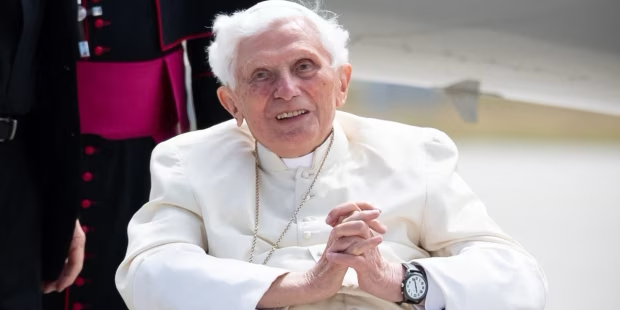
— Is it morning or evening? My breath caught, then came back. As if it were showing signs of malfunction. It was failing me. My lungs were leaving me. I breathed that I was ready. My God, how I love it! But then, my breath returned, as if nothing had happened, as if it had just stepped out to run an errand. The memory came out… Continue reading
-
Antigone, defiant and intimate (7/7. Love)
Part 7 and final part: Love. Antigone's desire is familial; she does not want to leave her brother unburied. Creon, on the other hand, desires to assert himself as king and demonstrate his power. Antigone prioritizes family ties, which embody love and reveal a person's true nature. Creon consolidates his power by signing a law that must… Continue reading
Antigone , stupidity , counter-revolution , ethics , history , intimacy , forgiveness , political correctness , religion , totalitarianism , tradition -
Antigone, defiant and intimate (6/7. The vocation)
So many stories about identity! The word appears neither in Greek epic nor in tragedy. Identity in Antigone's time was rooted in lineage and belonging to a city-state. Identity was imbued with rootedness. Family and city-state gathered under a virtual banner everything that the other needed to know about oneself… Continue reading
-
In light of the values
Authority has lost its nobility along with humility. Authority has become synonymous with implacable order, unthinking force, and tyranny. What a reversal of values! Whereas, according to Antigone, authority prevented tyranny! The modern era has this impression of authority because it has been trampled underfoot by… Continue reading
-
Antigone, defiant and intimate (3/7. Destiny)
Part 3: Destiny. Man descends from the tree. Man, like the tree, is defined as much by his roots as by his fruit. Man, like the tree, depends on external and internal elements to reach maturity. Man resembles this trunk sculpted by trials, leaning on its roots and bearing fruit of varying quality… Continue reading
Antigone , counter-revolution , ethics , history , intimacy , forgiveness , religion , revolution , totalitarianism , vulgarity -
Antigone, defiant and intimate (2/7. The funeral)
Part 2: The Funeral — “My dearest Ismene. I came this morning to tell you that I've taken care of everything. I used the same funeral home for both our brothers. I couldn't choose, and since our brothers didn't leave any last wishes, I took matters into my own hands to… Continue reading
Antigone , counter-revolution , ethics , history , intimacy , death , forgiveness , priest , religion , revolution -
Antigone, defiant and intimate (1/7. The family)
Part 1: The Family From the very first reading of Antigone, an ambiguity arises in the reader's mind. Does Antigone embody action or reaction? What drives Antigone? Reaction never exists on its own, whereas action needs no one; it is legitimized by the act itself. Action always inaugurates something. Unlike what is often… Continue reading
Antigone , Charles Maurras , counter-revolution , ethics , history , intimacy , forgiveness , priest , religion , revolution -
News about humility
The human vision of humility is like the human vision of love: limited. Humility must exert its influence at all times and in all places. Humility does not allow for a choice in whether or not to practice it. Humility thus demands infinite availability and infinite vigilance. It demands—a term that has almost disappeared from our… Continue reading
-
In the shadow of Ernesto Sabato
When Ernesto Sabato passed away on April 30th at the age of 99, he repeated to himself the words of Maria Zambrano: "To die, this elusive act which is accomplished through obedience, takes place beyond reality, in another realm." In his home in Santos Lugarès ("Holy Places" near Buenos Aires), Ernesto Sabato obeyed this final injunction. He… Continue reading
Argentina , stupidity , Catholicism , counter-revolution , Ernesto Sabato , war , history , forgiveness -
Original fault
Despite Shûsaku Endo's doubts about the true Christianity of the Japanese, as expressed in the admirable "Silence," it also seems to me that the Japanese share a fundamental trait with Christians: their ability to empathize. Isn't this one of the cornerstones of Christianity, one… Continue reading
-
Forgive me, something will always remain…
In this brief reflection on forgiveness, I simply wanted to revisit the inadequacy of saying "sorry." Forgiving is sometimes extremely difficult. I confess I still harbor some resentment deep in my heart. I constantly confess it and ask for a little grace to soften the hardness of my heart, but no… Continue reading