
Authority resembles those secret agents so dear to Graham Greene, who conceal their identities to avoid losing them further in a disastrous encounter. It still has a few devotees who cherish it and deploy considerable ingenuity to define it, redefine it, so that it may be understood by their time. To this end, they link it to tradition, honor, hierarchy, natural law… they constantly provide it with a cane, crutches, a tripod, so that it can emerge from its hiding place and breathe some fresh air. The words they attach to authority are like bandages, cauterizations, which, in the end, only conceal it a little more. The disenchantment has been pronounced for a long time and is intensifying. Nothing can save authority; everything it inspires evokes outdated notions that we know how to do without. It serves no purpose. It is utterly useless.
Authority, in its Latin sense, comes from *auctor* , meaning "he who increases," and * auctoritas* , meaning "the power to compel obedience." Authority is synonymous with power, a fact often overlooked when power and authority are separated. However, it is a power without force; it does not coerce. Its scope of action arises from ethics, knowledge, and belief… because it requires obedience. This is where we begin to stumble over its meaning, because our era does not take kindly to obedience. And, since our era hardly values belief any more, it denigrates authority. It devalues it, identifying it with a cowardly and blind power. It gives it a nickname that has become an unspoken implication: authoritarianism . As if to reveal what it hides beneath its mask of gentleness: a brutal, violent, and unstable nature. It must be unmasked. It must be slandered. Above all, we mustn't understand anything anymore, and what is understanding nothing if not a new form of belief? Authority imposes limits that no one wants anymore, limits that constrain and prevent us from being what we desire. Our era believes that by being what we desire, we will become what we deserve. Individualism reigns supreme, without exception. No one knows better than oneself what is good for oneself. Let that be clear! Since limits and hierarchy had to be disregarded, our era discarded authority after having put it on the defensive. Authority was the catalyst of modernity. It had to be subdued.

The Crisis of Culture
Hannah Arendt wrote illuminating pages on authority. “Since authority always requires obedience, it is often mistaken for a form of power or violence. Yet authority excludes the use of external means of coercion; where force is employed, authority proper has failed. Authority is incompatible with persuasion, which presupposes equality and operates through a process of argumentation.” ¹ Authority rests on charity. It gives and it receives. And charity must be present in both. In his wonderful book, The Art of Discipleship , Father Jerome, a monk of the Abbey of Notre-Dame de Sept-Fons, writes: “Do not ask your master to speak for the sake of speaking. Question him about the problems of human destiny and related problems, problems that are always relevant. And how does he himself experience them? How does he manage to accept them with courage and tranquility?” Ask him what he knows for certain, what is no longer in question for him, what he considers indisputable and immutable. Authority is love; true love for the other. Authority is one of the most frequently used words in the New Testament. It refers to Christ, who has all authority and all power, as Saint Paul reminds us with his famous phrase, "Omni potestas a Deo" (All power has been given to God), and as he himself reminds us: "All authority in heaven and on earth has been given to me." All power: all authority and all authority. Jesus demonstrated his authority through his preaching, which broke with everything that had been heard until then. He has authority—power—over the sick, demons, but also over nature, through trees, the sea, and most importantly, over death. Jesus Christ embodies authority, and he is the model that believers must follow and imitate. But while Christ has complete power over what prevents humanity from growing and becoming the promise it contains, he does not impose faith on anyone. Authority rests on the freedom and consent of both parties to be fully experienced. Indeed, how many people are touched by the finger of God? How many of them consent to acknowledge that it is the finger of God? How many change their entire lives to become that new person of whom Saint Paul speaks? And how many continue to wait by the wayside, even after the encounter, like the "rich young man"? "Who, moreover, can deny that the disappearance of virtually all traditionally established authorities has been one of the most striking features of the modern world?" ¹ Authority gives tradition its aura and dignity, and tradition is founded on authority.
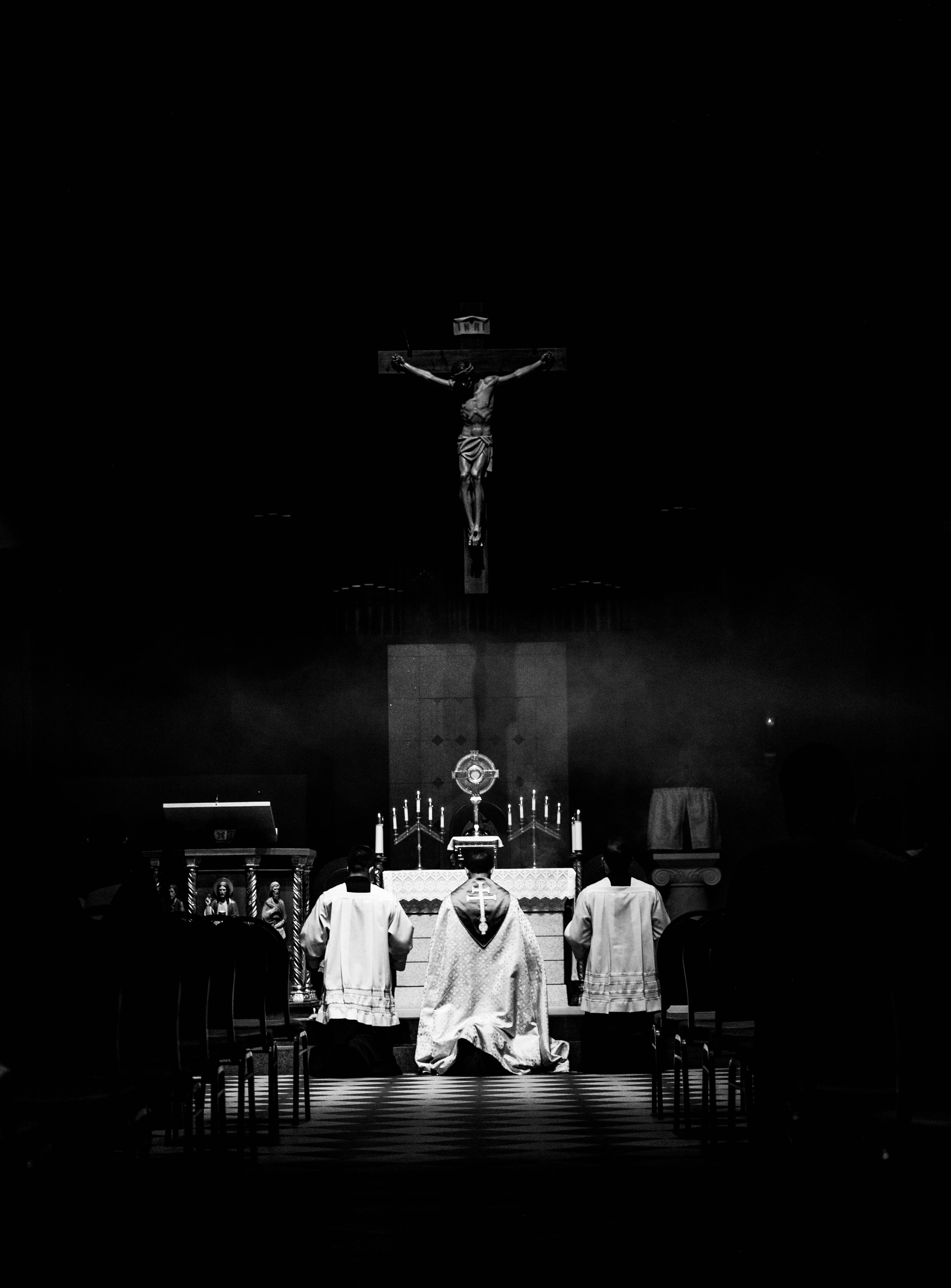
The lost authority
Authority was thus torn away from everywhere. At school, authority was prohibited to allow for the child's creative freedom. In the family, it was eliminated in the blink of an eye. Pierre Virion<sup> 4 </sup> emphasized the extraordinary division of power that exists between men and women, with men holding authority and women wielding power—a complementarity both physically and intellectually. Since men possessed superior strength, they were expected not to use it within the family, whereas women, of weaker constitution, became the holders of power, and could wield force. The family began its slow disintegration when its authority was taken away. Everyone resented the family's natural authority; it was the envy of many. The State, in particular, attacked it relentlessly when it should have been protecting it. The family instilled all the rules of life: the learning of habits for character building and the development of emotional and behavioral maturity, the understanding of the life cycle, restraint and the art of living together, and above all, it taught one to resist the fluctuations of society and the envy it engenders. The first taste for effort stems from these constraints. Growing up and helping others grow. Authority is ambitious, demanding; it requires respect. Authority is sacred and protects what is sacred. It is what it protects. The same is true of tradition. And tradition evolves as soon as we engage with it; it is organic. If tradition must be given life, it is equally tradition that gives life. Because it calls upon everyone to enter its realm, whereas some thought they could profit from it by importing it into their own sphere. One must step outside oneself to embrace tradition; it is therefore impossible to appropriate it. No one gives it life or revives it; it takes the life of each person and transforms it, but one must allow oneself to be taken in. The fatal weapon that watches over and attacks tradition, and therefore authority, is called forgetting. Memory founds tradition and establishes it on reality. What is important in the family is awareness, leading the child to become aware so that they are autonomous and do not succumb to the sirens of envy, always ready to manifest itself to the detriment of humankind. The child will absorb an ethic that is more or less shared by the world around them, because this ethic depends on their geography. “We are in danger of forgetting, and such forgetting—leaving aside the riches it might cause us to lose—would mean, humanly speaking, that we would deprive ourselves of a dimension, the dimension of the depth of human existence. For memory and depth are the same thing, or rather, depth cannot be reached by humankind except through memory . ¹
Ulysses and the Quest of Western Man
In the 20th century, two wars, both claiming to uphold high values (patriotism, liberty, etc.), opened Europe's veins forever. Human beings, driven by reaction, were quick to blame authority for all the evil that had just been unleashed. The subsequent rejection of the transmission of knowledge and values marked a kind of end of history. The loss of the desire for God is at the root of Europe's inexorable decline. Since then, nothing has held true authority. There are two kinds of people who reject authority: those who feel inadequate and those who deny its grandeur. As Hannah Arendt reminds us, "The same argument is frequently used regarding authority: if violence fulfills the same function as authority—namely, making people obey—then violence is authority." ¹ When understanding and accepting authority are love, it is like an unconditional commitment to the future. Since the second half of the 20th century, Europe has been the only civilization to fully embrace the idea of no longer passing on its history! Worse: to ridicule it and vow to revise everything from A to Z without any mercy. The desire for destruction is intense; everything must be razed and the past erased. Europe is the butt of jokes in Africa and Asia, but who cares? Europe, with its successive upheavals, its revolutions, its chronic instability since the 16th century, is not joking in its will to self-destruction. Self-loathing is complete, and it seems difficult to imagine a reversal. James Joyce, before writing his Ulysses , explained that the quest of European man fascinated him. And the Irish writer's fascination with Odyssey had never waned. This work crystallized all the tensions and the quest of European man, ahead of his time, always dissatisfied, with uncertain and unstable desires, fleeting melancholy, and an insatiable thirst for adventure. Clever and daring like his character, whether returning from the Trojan War or wandering the streets of Dublin, he imposes his discoveries on the world while constantly questioning his identity. Ulysses will take a long time to rediscover the meaning of his being, and his scars will be eternal. Like Europe itself?
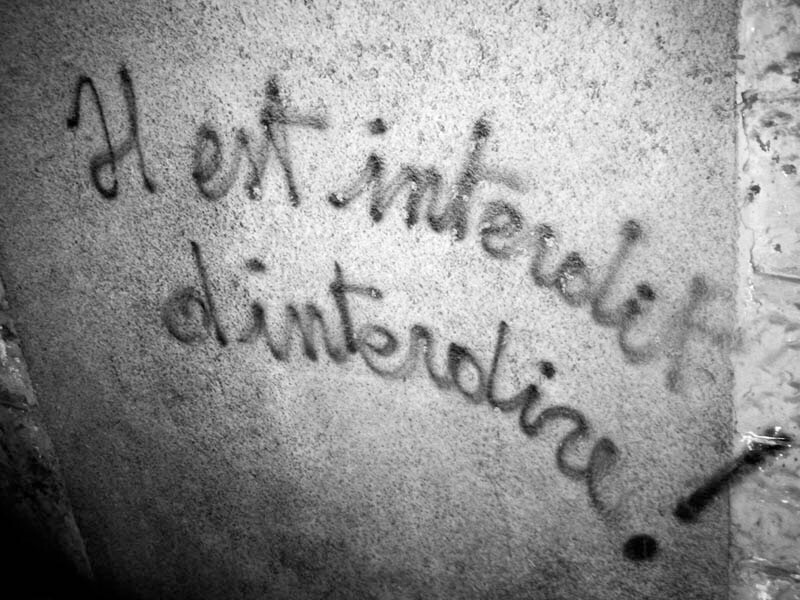
May 68, the permanent revolution
The chasm created in sixty years is abysmal. In the school notebook of an eleven-year-old girl during the 1959-1960 school year, one could read the following text, written almost in calligraphy: "School develops our intelligence, shapes our conscience and character, and makes us good people." Indeed, in 1959, the masculine gender was understood to be neuter. The notebook also contained: "We must strive each day to be a little better than the day before. Courage," or "Go where you want, you will find your conscience there." And "Good deeds are not always rewarded. Do good for the sake of good, not for the reward." Let us conclude with this one, which crowns the whole: "Everything in life is a matter of duty. To be faithful to it: that is honor. To fail to respect it: that is shame." None of these precepts are comprehensible to our young contemporaries today. For this reason, our era calls for "coaches," experts of all kinds, to compensate for the common sense that was once so widely shared in families. Thus, knowledge is passed on in exchange for hard cash. Because it was no longer acceptable to force children to look up at their parents, because parents didn't really deserve it, and besides, who were we to force a child to do what they didn't want to do? The reaction forced the adult to look down at the child and transformed the child into a king. But children became kings because adults no longer wanted to be. Twenty years ago, a book of dialogues, begun on the radio, brought together Philippe Tesson and Laurent Joffrin. The latter displayed, with undisguised satisfaction, the advent of horizontal authority; it should be noted that he recognized a large utopian element in this advent. Wouldn't this utopia create problems? Joffrin wasn't even afraid of it, so lost was he in his dreams of deconstruction. With May '68 gone, Joffrin, an integral part of this petty-bourgeois revolution, knew what he dreamed of, and he never stopped dreaming. May '68, a kind of open-air playground, had imposed upon a society starved of oxygen that the vanished desire for God had been transformed into sexual desire and that everything would be settled by unzipping one's fly or pulling down one's pants, depending on the situation. Compared to Catholicism and its new man, how could one not be susceptible to such an easy offering? Compared to tradition, this new, limitless comfort rewarded ingratitude. Joffrin wanted to believe in an authority without hierarchy; everything since the 1950s had led, sometimes without real intent, often through compromise, to a destruction of hierarchy, and therefore of authority. Democracy became the nebulous buzzword. There was always a demand for more democracy, which would soon rhyme with equality. It was also during this period that words lost their meaning. Oh! They didn't quite lose their meaning. They just twisted it. Gradually, the meaning of words was stolen from them, as if they had been drained of their life force. Everyone won: the word lost its authentic meaning, and could then be used to mean something else. It could even be used to say the same thing while meaning something else entirely. Those who haven't forgotten their catechism lessons know who the prince of confusion is. They also know that in the absence of authority, tyranny wins. And they have also known for two thousand years that no other religion but their own asks them to grow ever more, to emancipate themselves, by taking root and soaring confidently toward heaven. Catholicism has so much to offer our era, which continues to bury Antigone and will soon no longer know her. Tyranny, therefore, has free rein to infiltrate everyone's daily life. Thus, as Philippe Tesson predicted, it operates through Finance and the Market, the only vehicles of sacrosanct equality.
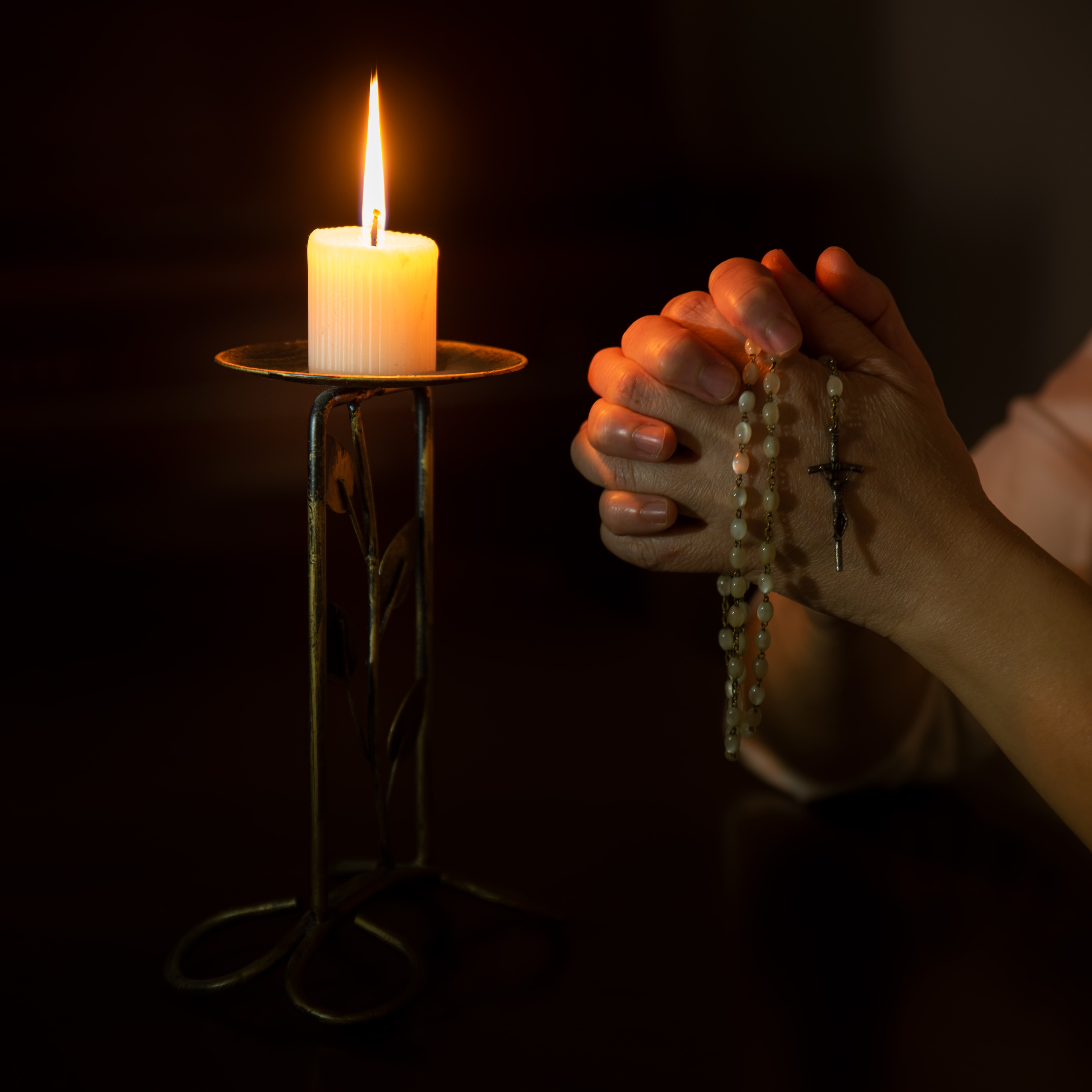
When you forget the law, you make laws!
There are bulwarks of authority: institutions. Among these is the Church. Self-improvement in order to transmit knowledge. Self-enhancement in order to ennoble others. No motto of authority is foreign to the Church. One might even think it invented them. They are inseparable from it. Yet, like everything around it, the Church would forget its fundamentals by allowing itself to be contaminated. Here too, the word lost its authentic meaning and could mean something other than what it intended. However, it had prepared for such a situation since its origins, notably by establishing Latin as its official language. It believed that in this way it could convey its teachings without their meaning evolving. The time of outright heresies seemed long gone, and perhaps it is for this reason that, weary of the struggle, the Church lowered its guard and allowed itself to be contaminated. As usual, the attack came from within. Vatican II marked a break without actually marking a break, as it should, since the word "break" no longer meant what it had always meant. Structures, as elsewhere, had shattered or become fluid, which in a sense amounted to the same thing. "Clarity is replaced by obscurity, which we are constantly forced to 'interpret,' truth by vagueness. We used to speak of 'dogmatic progress.' Vatican II and the new liturgy invented a new magisterial mode: dogmatic regression." 8 So the Church continued to bleed and lose members, both faithful and priests 9 and while its reforms had in no way slowed or reversed this hemorrhage, enlightened minds demanded ever more reforms. The disease of reform struck the Church with full force. When you forget the law, you make laws! Authority had deserted the Church, which suffered from the same ailments as the era when it should have been guiding it and giving it meaning. “Do not conform to the pattern of this world, but be transformed by the renewing of the Spirit. Then you will be able to test and approve what God’s will is—his good, pleasing and perfect will.” 10 The Church knew it couldn't build on sand. For two thousand years, it had known it held an undeniable advantage: its authoritative tradition, which it knew it couldn't afford to compromise. And it did compromise. A little. Because everything became a little bit by trying to be everything. Turning its world upside down, the Church attempted its revolution, to show it wasn't easily fooled, that it too was capable of speaking about its time, of speaking as an equal, of not appearing foolish and grumpy in salons, trying to make itself beautiful… Yet another reaction, yet another reaction, in the face of a world flexing its muscles, adopting the world's postures. People no longer knew which way to turn. We no longer understood much of what was being said, or we said it incorrectly, since the words themselves had become detached from their meaning. And now they were eyeing each other warily… Moreover, we should have returned to the fundamentals, but we continued our headlong rush. Europe was entering that period where everything new was good, where only what was new was good. The United States was no exception. So what was the point of old things like the Church? Instead of discussing the world and its flaws, we talked to the world as if with a friend at the pub. We had something to learn from everyone, we thought, even from sinners; hadn't Christ come for them? The kerygma! The kerygma, not morality! we shouted from the rooftops, as if to convince ourselves we were doing the right thing. It's the kerygma that counts! Of course, the crowds were no longer in procession, because there were no more processions. And the crowds deserted the churches too… In short, people dreamed of the kerygma as if it were some grand revelry! They no longer pointed to God, but went to meet him everywhere. But the kerygma imposed something that was no longer explicitly stated: conversion. It wasn't a simple announcement; it was a life-changing, binding one. Moreover, hierarchy was disregarded in favor of beatific smiles. “Come, follow me!” is nothing like “Shall we have a drink together?” but rather like the immediate obedience so dear to Saint Benedict. To speak like this, one had to don the armor of authority, and through a marvelous contagion, by putting on the armor, one became the authority. Authority loves nothing more than to be incarnate. It doesn't mistake itself for another; it becomes that other. False authorities may seduce, but they never achieve this transfiguration. False authorities, heresies—for we must call them by their name—remain idols of the moment; they do not metamorphose, they seduce or persuade. And, to their great detriment, they want to choose. They want to choose what they want to believe. The times, again! We are willing to believe, but we will decide how and in what we believe. A fundamental precept was missing from this Church: it was not enough to encounter the Lord, even to feel an emotion, in an age of sensationalism and individualism, but to become aware. Christ did not come to apply a "patch" to quit smoking or to resolve to behave better; he came to deprogram us from everything we believe and to promise us a new humanity, the new humanity, the true humanity! The announcement lacked awareness. We were witnessing the rise of "ideas in the air, ideas suspended in mid-air," as Claude Tresmontant aptly put it. These ideas in the air represented an unprecedented form of pollution, for how can one take root with words that have lost their meaning?
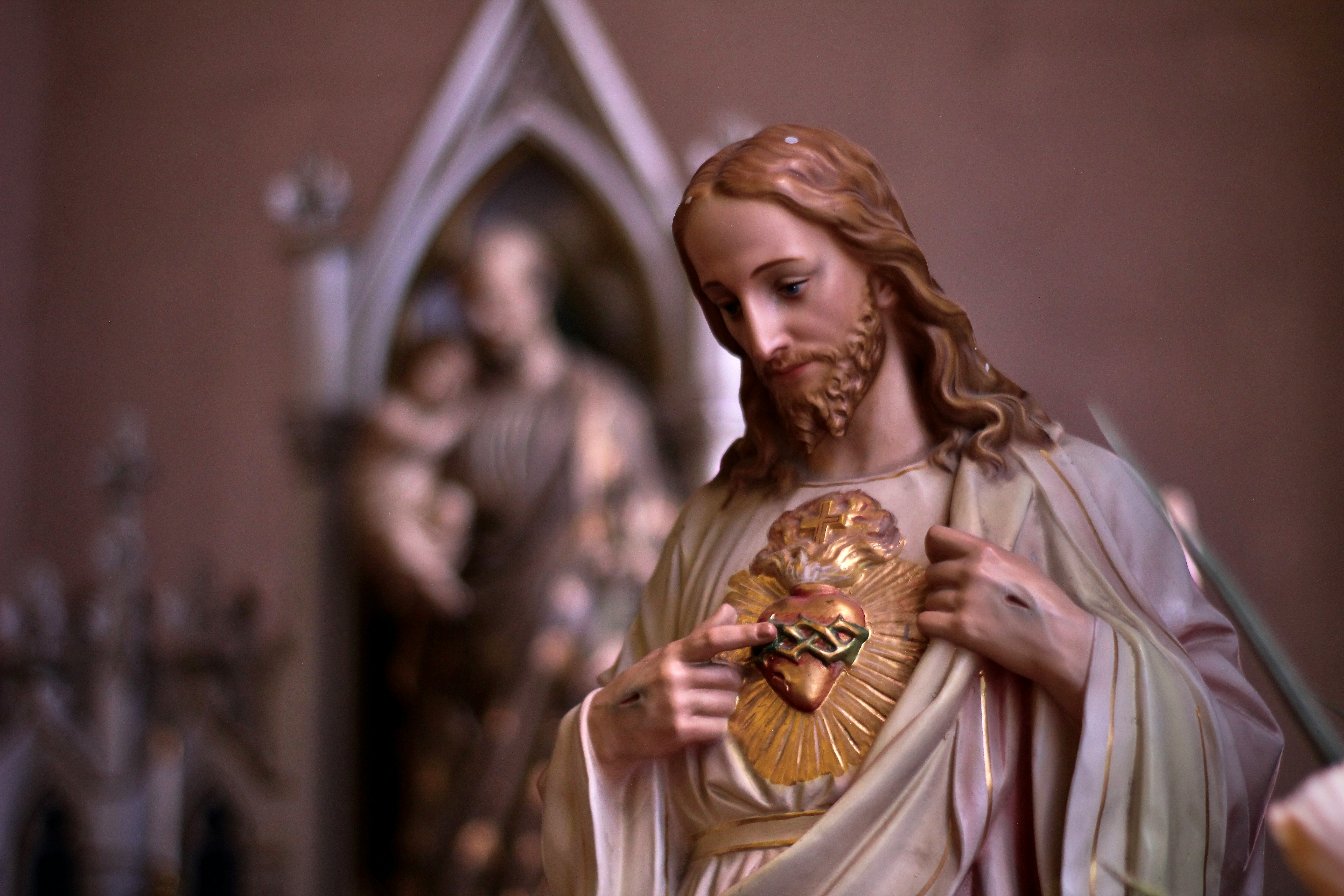
Can the Church of Christ live without authority?
Christ sacrificed himself for humanity, which must, in turn, sacrifice itself for him. To sacrifice oneself means to sacrifice one's feelings, one's emotions, to sacrifice everything or nearly everything one loves on earth, in order to aspire to a higher life, to be that new person whom Saint Paul teaches us to become in his letters. The encounter and then the sacrifice, because the desire for God transcends and dominates, while petty desires, however delightful they may be, hinder the metamorphosis. "The answer lies in the way God reveals himself in the Bible: as the one who loves first and who teaches us to love in return so that we may be able, like him, to take the initiative in loving." 12 This is God's act of power. We find in it the necessary tenderness, the useful surrender, the offered obedience. "Because worldly people want to change their place, their destiny, their idols, and to change them perpetually, the friend of God must remain and hold fast in the place where God has placed them." Indeed, between the friends of God and the world, there is antithesis and rupture. What one chooses, the other rejects. Otherwise, there would no longer be two camps, but only one: the world.” 13 In the Rule of Saint Augustine: “Have one soul and one heart, directed toward God.” When one loves God, one becomes a disciple of God, desiring to know Him and please Him ever more. Authority does not act alone; it builds, but without freedom, it is nothing or only half-real. What Philippe Tesson sensed during his discussion with Laurent Joffrin can be summed up in one word: envy. The entire New Testament is a remedy against envy. All the words of Jesus inoculate against envy. Philippe Tesson, faithful in his intuition, clearly felt that the end of authority would mark the advent of a catastrophe. Thus, at the same time, in order to embrace the world, the Bride of Christ instituted an internal confrontation between dogma and pastoral care. She thought she would benefit from it. The popular saying, another form of authority—popular authority, one might say—implored us not to compare, "comparison is not reason," for it knew through wisdom that comparison inspired envy. It was pointless to oppose dogma and pastoral care, because dogma includes, provokes, and requires pastoral care. All these initiatives often take on the attitude that Dom Guéranger envisioned as ways of " believing a little less." 14 Making the yoke a little easier? That has already been done and promised by Christ. No need to add to it. The modern Church thus sought to oppose complementary concepts. Saint Jerome declared: "Jesus Christ acts here like the doctor placed before a patient who behaves contrary to all his prescriptions?" “Truly,” he said to her, “how long will I waste my time and the effort of my craft in your house, where I command one thing, and you never fail to do another? And when, afterwards, you come to blame others for the continuation of your evil, is that not enough to leave you here forever? Generation devoid of faith and common sense, how long will I be among you and suffer you?” 15 Benedict XVI, the prophet, summarized the current situation as early as 1969 in a few concise words: “Soon, we will have priests reduced to the role of social workers and the message of faith reduced to a political vision. All will seem lost, but at the opportune moment, only in the most dramatic phase of the crisis, will the Church be reborn. From the present crisis will emerge ‘the Church of tomorrow’—a Church that will have lost much. It will be smaller and will have to practically start from scratch.” It will no longer be able to fill all the buildings constructed during its prosperous period. With the number of faithful dwindling, it will lose many of its privileges. Unlike in the past, the Church will truly be perceived as a society of voluntary individuals, whom one joins freely and by choice. As a small society, it will be led to rely much more frequently on the initiative of its members. 16
Rediscovering the meaning of hierarchy
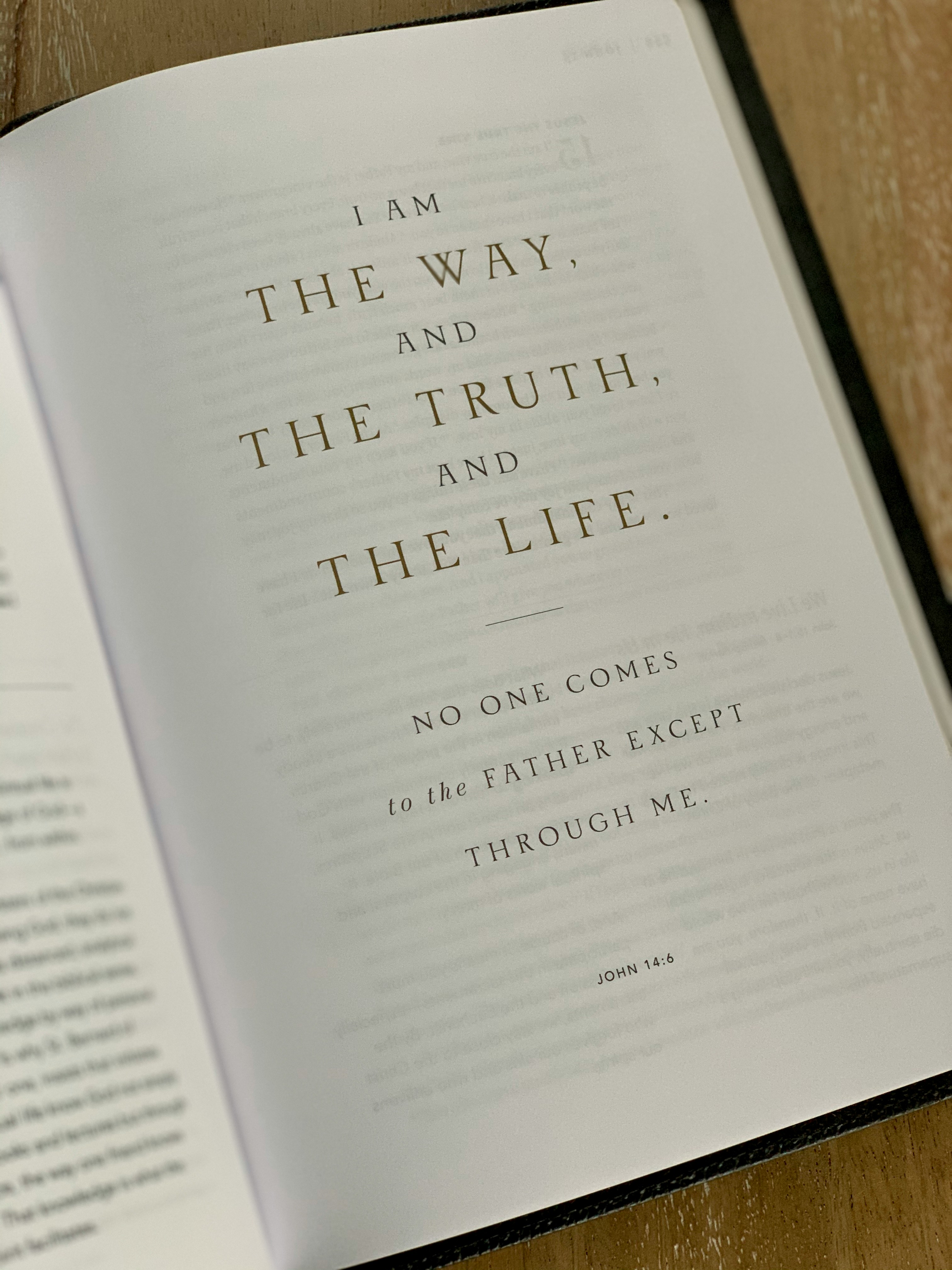
Hierarchy, with its authority, became the most reviled thing imaginable. Before long, if it hasn't already happened, tyranny, with its own seductive and cajoling charm, will be preferred. Freedom is steadily declining in the hearts of men. France, which had raised the flag of liberty high throughout its history and spread it throughout the world, has now lowered it to half-mast. Under the onslaught of relativism, the Church is constantly retreating; it can no longer rely on the message of Christ, since it holds him up like a shield. He is so much more. He is "the truth, the way, and the life" when the Church uses him only to protect its own life. "Whoever loses their life for me and for the gospel will save it." All these fault lines, often created by the clergy, must be overcome. No dogma exists without pastoral care; dogma has included pastoral care since time immemorial; it is, in a way, the application of pastoral care. This distinction exists in the Orthodox religion, which attempts to understand the hearts and minds and demands a "practice" of dogma. Previously, when a young child approached a table where delicate objects were placed, they were taught, repeatedly, "at the right time, at the wrong time," not to approach or touch them. To restrain their desires, in a way. In contemporary education, objects are placed high up so that they are unreachable. Learning no longer takes place. And, in doing so, meaning is lost. The same is true for many subjects where authority does not prevail: such as the assimilation so decried today, which has always included integration. Every French person knows this deep down. When one became French, one became Catholic and Roman. One must no longer believe in either to want to integrate. Knowing that integration will create multiculturalism, which will lead to communitarianism. Integration is loving the other without authority. Having no desire to help them grow through the introduction of a new culture, wanting to share nothing with them, and wanting to know nothing about them. The creation of social envy. "Take comfort, you wouldn't be looking for me if you hadn't already found me." Authority is reborn from the love it is given. As is tradition. Moreover, by reconnecting with tradition, one reconnects with authority. Prayer offers privileged access. Prayer that sets one apart from the noise of the world. Prayer and the sense of the sacred. More majorum , as legionnaires repeat before a battle or a military parade. To wish to position oneself, to maintain and commemorate the glory of the ancients. To find oneself worthy of it and, by doing so, to honor it.
If the priest knew…
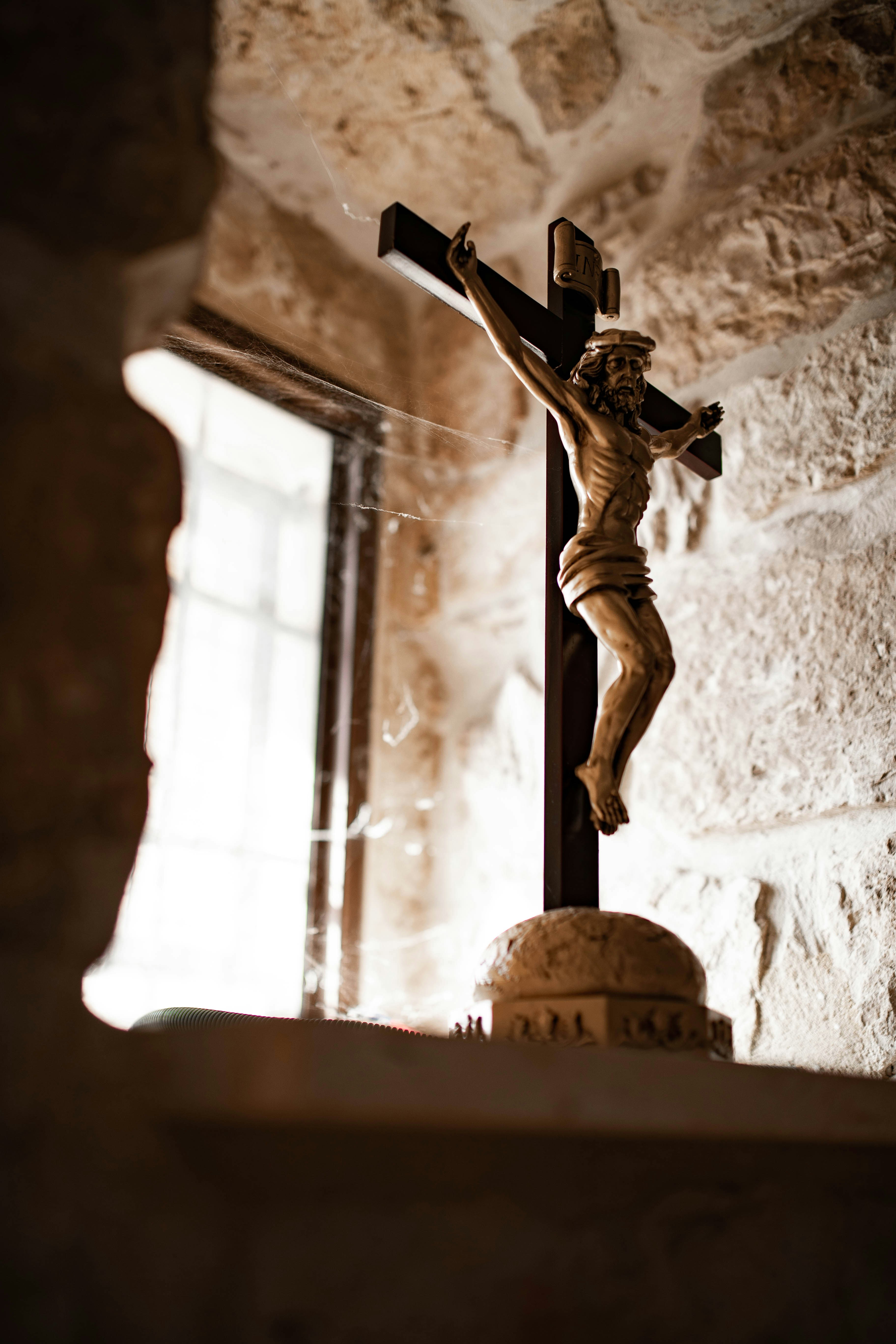
In a compelling article, Archbishop David Macaire wrote : “The works of the human mind, when they do not fear God, reveal themselves to be terrible masters. By making God, his servants, his liturgy, and even His Name disappear, our society, founded on humanism, science, politics, and economics, has gone astray. Far from liberating humankind, it has blinded, enslaved, and then bewitched it.” And the Archbishop of Saint-Pierre and Fort-de-France explained in this article that the world was changing, that we had gone from one level of comfort to another, but that harder times were approaching. He recounted this anecdote found on the internet: “My grandfather walked 16 km, my father 8, I drive a Cadillac, my son has a Mercedes, and my grandson will have a Ferrari… but my great-grandson will walk again.” “I believe,” the Dominican continued, “that difficult times have returned… In a way, this is good news: our grandchildren will walk again, they will be poorer, but they will be more worthy of their fathers! There will be warriors in the world and martyrs in the Church; Holy Week prepares us for this!” But we must rediscover our memory, the thread of our history. The Gospel of Saint John promised the Holy Spirit to remember the words of Christ. Saint Augustine declared: “Sedis animi est in memoria” (the seat of the spirit is in memory). This is also what the late Abbot Gordien wrote in his spiritual testament, 20 , 2022, to those present at his Requiem Mass: “The priest must be first and foremost on God’s side. This means that he must spend time in the presence of the Lord to be with Him.” Drawing on the teachings of the holy Curé of Ars, he would repeat, echoing his words: “If the priest knew what he was, he would die.” This was far removed from the rhetoric that makes priests feel guilty for who they are, or for who they are not. Far removed from the quarrels over clericalism or anticlericalism… Father Gordien recalled the beautiful speech by Benedict XVI that linked freedom and obedience, because “the will of God is not tyrannical, outside of our being, but it is ‘creative will’” 21 in which the priest finds his identity. Therefore, we must not fear obedience, which remains the most orderly way to embrace the mantle of authority. Father Gordien remained discreet about the mistreatment he endured during his all-too-brief vocation, for he knew he had always acted according to the Lord’s will and in harmony with that relationship. “Yes, Lord, I want to come to you, to draw near to you who are all my happiness, and to entrust to you this burden of suffering that weighs dully on my shoulders. If it is your will, I accept to bear it, but with you, for without you, my life falls into ruin. I desire to be entrusted with your yoke, that is, with your most gentle will, to do what you want and become your true disciple. ‘Come to me, all you who are weary and burdened.’ These magnificent examples restore faith in authority. Examples of faith that restore faith. A deepening of faith through prayer. Cardinal Sarah reminds us, time and again, how the crises in the Church stem from a lack of faith and, therefore, from a lack of prayer.” With Abbot Gordian, let us celebrate the authority of Henri d'Anselme, standing between defenseless newborns and a knife-wielding assailant who fled before this young man armed with a backpack: "What was in him was afraid of what was in me," the 25-year-old would say on his way to a Tour de France of cathedrals! Let us think of the fruits of an Arnaud Beltrame, who , Lord!" Each of his men repeated this formula. A formula that carries authority and brings joy. The two complement each other, for "Christian joy has its roots in the form of a cross."
- The Crisis of Culture. Hannah Arendt ↩
- Gospel of Matthew, 28:18 ↩
- The Crisis of Culture. Hannah Arendt ↩
- Christ Who Is King of France , Téqui editions , 2009 ↩
- The Crisis of Culture. Hannah Arendt ↩
- The Crisis of Culture. Hannah Arendt ↩
- Philippe Tesson and Laurent Joffrin. Where Has Authority Gone? NIL Editions ↩
- Abbé Barthe in Res Novae ↩
- Vocations. The number of seminarians worldwide jumped from 63,882 in 1978 to 110,553 in 2000—far exceeding the rate of global population growth—and increased more steadily over the following decade, peaking at 120,616 in 2011. The number of seminarians in 2023 is 109,895. It has been steadily declining since 2013. The decline was particularly pronounced in 2019. ↩
- Saint Paul, Epistle to the Romans. 12, 1-5. ↩
- Father Cantalamessa Raniero's leitmotif (in Famille Chrétienne no. 2358) was taken up by those parts of the Church that consider themselves avant-garde. This cry is certainly still relevant today, were it not for its intended purpose of rejecting dogma and, above all, avoiding forcing anyone to do anything. As if the goal today were no longer the conversion of hearts. As if one could choose whichever dogma suits one's taste within the Church. ↩
- Abbé Iborra. Sermon for the 17th Sunday after Pentecost . ↩
- Father Jerome. Monastic writings. ↩
- Dom Guéranger. Characteristics of the antiliturgical heresy – 1841. ↩
- Quoted by Bishop Pie. France is sick . ↩
- Razinger's prophecy about the Church. ↩
- Gospel of John, 12:23 ↩
- Blaise Pascal. Thoughts ↩
- Catholic Church in Martinique. Our grandsons will walk there . ↩
- Abbot Cyril Gordien. Spiritual Testament . ↩
- Benedict XVI. Meditation on the priesthood before the priests of the diocese of Rome. ↩
- Henry of Anselm. ↩
- The hostage was saved by Arnaud Beltrame. ↩
- Saint Jose Maria Escriva. The roots of joy . ↩


Reply to Emmanuel L. Di Rossetti Cancel reply.