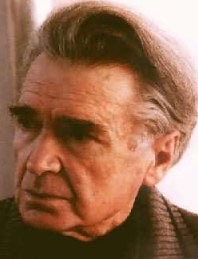
 In a short, acerbic book (On France, translated by Alain Paruit, L'Herne), Emil Cioran offered an answer to the French malaise. He explained how much he valued boredom, but he distinguished between two kinds: that which opens "its doors to infinity," "as a spiritual extension of an immanent void of being," and that which he considered one of France's most significant ills, its boredom "devoid of infinity." He calls it "the boredom of clarity... the weariness of things understood."
I used to say for a long time how I was never bored. I realize now that this statement was misleading. By saying I was never bored, I meant the exact opposite: I wallowed in boredom. I've ruminated on this phrase with satisfaction and am all the more annoyed with myself now that I realize its double meaning. It's contentment that should be banished. The satisfaction of hearing oneself speak or performing any action should always arouse suspicion within oneself. Contentment is precisely like a remedy for boredom, when one is afraid of being bored. Contentment is the agony of kairos.
I think I can link this boredom Cioran speaks of to my ability to project myself into a spiritual world. I derive no glory from it, no merit whatsoever, especially since I've always done it effortlessly. I also connect this concept to the answers Samuel Beckett gave in a book of interviews with another writer: "What have you been doing lately? Have you been writing? One must do something…" The humility conveyed here has always struck me as utterly supernatural. I imagine Samuel Beckett's handsome face repeating: "One must do something…" Supposing that this something were entitled Waiting for Godot, what a disillusionment for the petit-bourgeois! The work reduced to a hunt for boredom!
The rest of Cioran's text veers away from boredom somewhat to further clarify the French problem. Cioran skillfully employs a style where irony subtly surfaces without ever becoming a lament:
"A people without myths is on the path to depopulation. The desolation of the French countryside is the overwhelming sign of the absence of everyday mythology. A nation cannot live without idols, and the individual is incapable of acting without the obsession with fetishes.".
As long as France was able to transform concepts into myths, its vital essence remained intact. The power to imbue ideas with sentiment, to project logic into the soul, and to pour vitality into fictions—this is the meaning of this transformation, and the secret of a flourishing culture. To engender myths and adhere to them, to fight, suffer, and die for them—this reveals the fecundity of a people. France's "ideas" were vital ideas, for whose validity people fought body and soul. If France retains a decisive role in the spiritual history of Europe, it is because it animated many ideas, drawing them from the abstract void of pure neutrality. To believe is to animate.
But the French can no longer believe or inspire. And they no longer want to believe, for fear of being ridiculous. Decadence is the opposite of the age of grandeur: it is the retransformation of myths into concepts
An entire people confronted with empty categories—and who, with their hands, sketch a vague aspiration, directed towards their spiritual void. All that remains for them is intelligence, ungrafted onto the heart. Therefore, sterile.
Learn more about Against the Robots
Subscribe to get the latest posts sent to your email.
